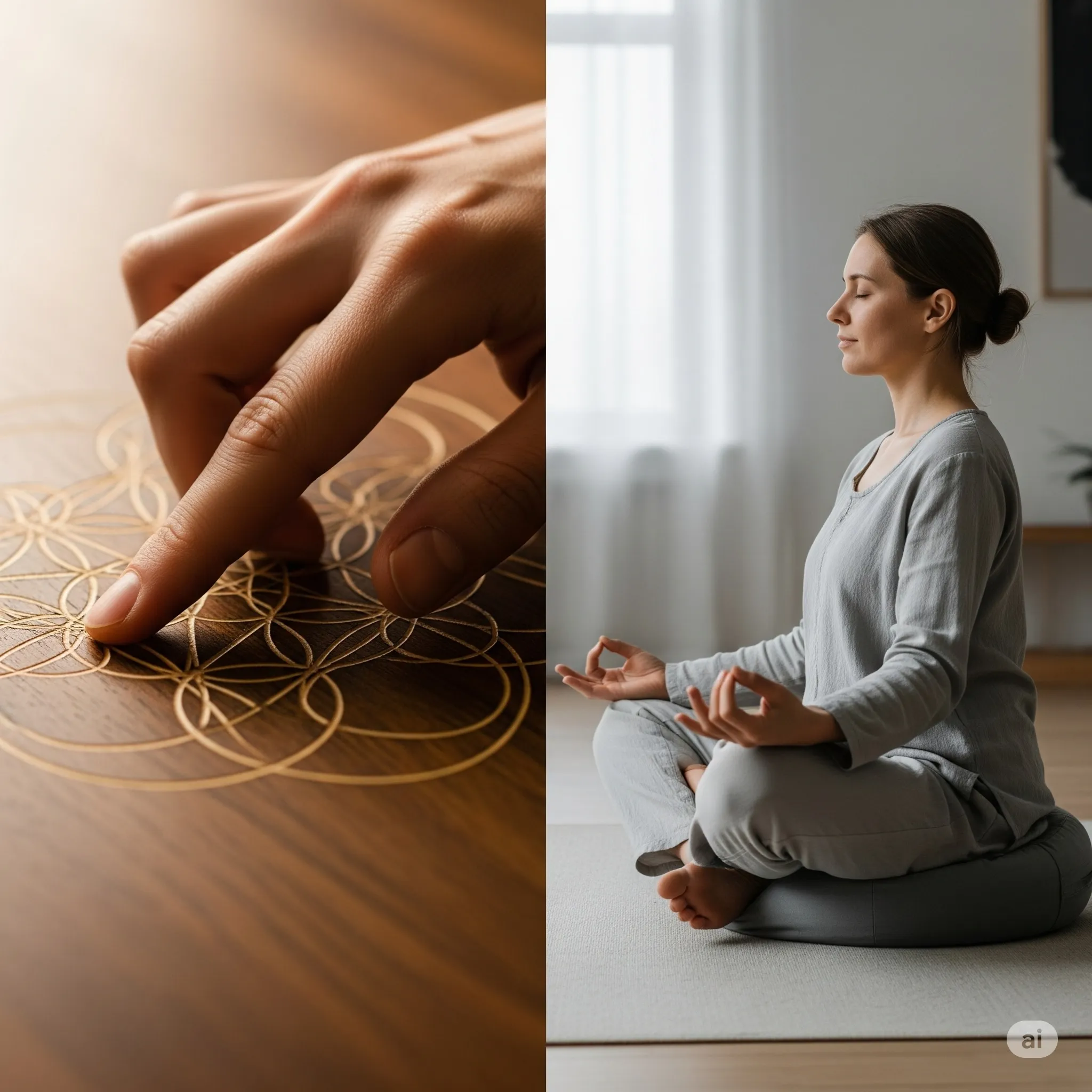
If you're meditation curious but haven't quite found your groove yet, you're not alone. When most people hear "meditation," they picture someone sitting cross-legged with their eyes closed, focusing on their breath. But here's the thing: that's just one flavor in a whole buffet of mindfulness practices.
The truth is, there are countless ways to cultivate mindfulness and inner calm. From walking meditations to body scans, from chanting to visualization—the meditation world is far more diverse than you might expect. And one practice that's gaining serious traction is tracing meditation: a simple, accessible form of moving meditation that might just be the perfect entry point for restless minds and busy lives.
So how does tracing meditation stack up against traditional seated meditation? Let's break it down.
Focus Point: Concrete vs. Abstract
Traditional Meditation: Most traditional meditation practices ask you to focus on your breath. Sounds simple enough, right? But if you've ever tried it, you know that focusing on something you can't see, touch, or hold can be surprisingly tricky. Your breath is there, sure, but it's abstract—constantly changing, sometimes shallow, sometimes deep. It's like trying to hold onto a cloud.
Tracing Meditation: With tracing, your focus point is refreshingly concrete. Whether you're using your finger on a screen or a pen on paper, you're following the tip of something real and tangible. Your eyes have a clear job: track this specific point as it moves along a predetermined path. There's no guesswork, no wondering if you're "doing it right"—just simple, clear visual focus.
The winner? For beginners, tracing takes the gold. Having a concrete focus point eliminates one of the biggest hurdles in traditional meditation: figuring out what exactly you're supposed to be paying attention to.
Engagement: Active vs. Passive
Traditional Meditation: Seated meditation is inherently passive. You sit, you breathe, you... wait. And that's when your mind decides to throw a party. Suddenly you're mentally organizing your grocery list, replaying yesterday's awkward conversation, or planning next weekend's activities. That "monkey mind" everyone talks about? It thrives in the quiet, passive space of traditional meditation.
Tracing Meditation: Tracing flips the script by giving your mind—and body—an active job. Your hand is moving, your eyes are tracking, your brain is processing visual-motor coordination. This gentle activity creates what psychologists call "cognitive load"—your brain is just busy enough with the tracing task that it doesn't have excess capacity for mental chatter.
Think of it like the difference between sitting in an empty room trying not to think about elephants (spoiler alert: you'll think about elephants) versus assembling a puzzle while trying not to think about elephants. The puzzle gives your mind something to do, naturally crowding out the unwanted thoughts.
The winner? Tracing meditation, especially for those who struggle with restless minds or find traditional meditation frustratingly difficult.
Accessibility: Skills, Space, and Mobility
Traditional Meditation: Let's be honest—traditional meditation can feel like a skill you're failing at. "Am I breathing right? Should my thoughts be quieter by now? Why is my leg falling asleep?" Plus, many meditation practices have specific requirements: a quiet space for seated meditation, room to move for walking meditation, or flexibility for yoga-based practices.
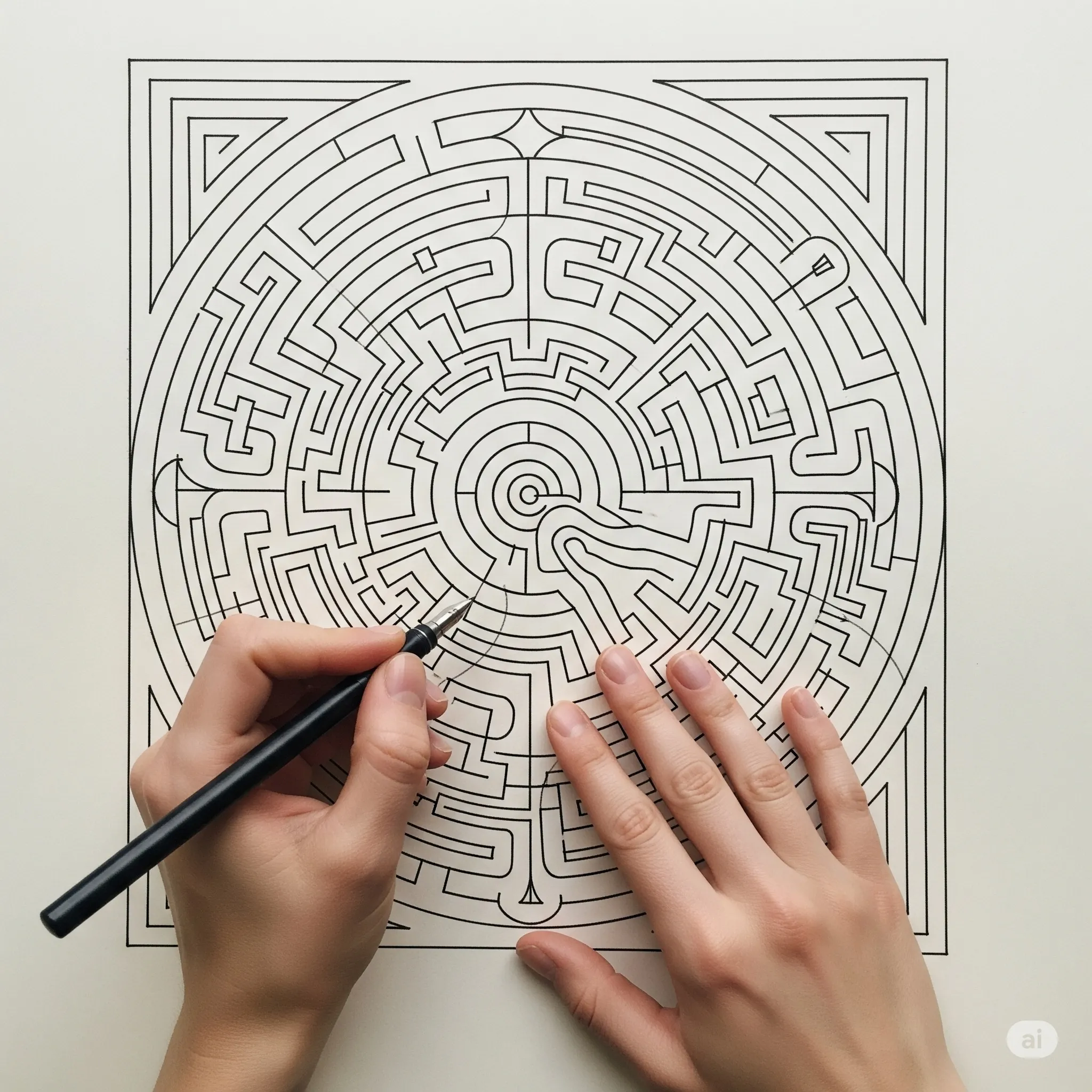
Tracing Meditation: Here's where tracing really shines. You don't need artistic ability—you're simply following a pre-drawn path, not creating art. You don't need a meditation cushion, a quiet room, or perfect posture. You can trace on your phone during a lunch break, at your kitchen table before the kids wake up, or even lying in bed. The space requirements are minimal, and there's no "wrong" way to do it.
Research from Harvard Medical School shows that mindfulness practices are most effective when they're easily integrated into daily life. Tracing meditation checks that box beautifully—it's portable, flexible, and requires virtually no setup.
The winner? Tracing meditation takes this category hands down for its sheer accessibility and lack of barriers to entry.
The Bottom Line: What Works for You?
Here's the most important thing to remember: the best type of meditation is the one you'll actually stick with. Traditional meditation works beautifully for many people—there's a reason it's been practiced for thousands of years. But if you've tried it and found yourself struggling with the abstract focus or wrestling with a restless mind, you're not broken. You might just need a different approach.
Tracing meditation offers something unique: the proven benefits of mindfulness wrapped in an active, accessible, concrete practice. It's meditation for people who think they "can't meditate," mindfulness for minds that need something to do, and calm for people with busy lives.
The research is clear that regular meditation practice—regardless of the type—can reduce stress, improve focus, and boost overall well-being. But those benefits only matter if you actually practice. And if tracing meditation is what gets you to show up consistently, then tracing meditation is exactly what you need.
Ready to See the Difference?
Don't just take our word for it. The best way to understand how tracing meditation feels is to experience it yourself. Sign up for Ibiss and try a free tracing meditation today. Your mind—and your stress levels—might just thank you.