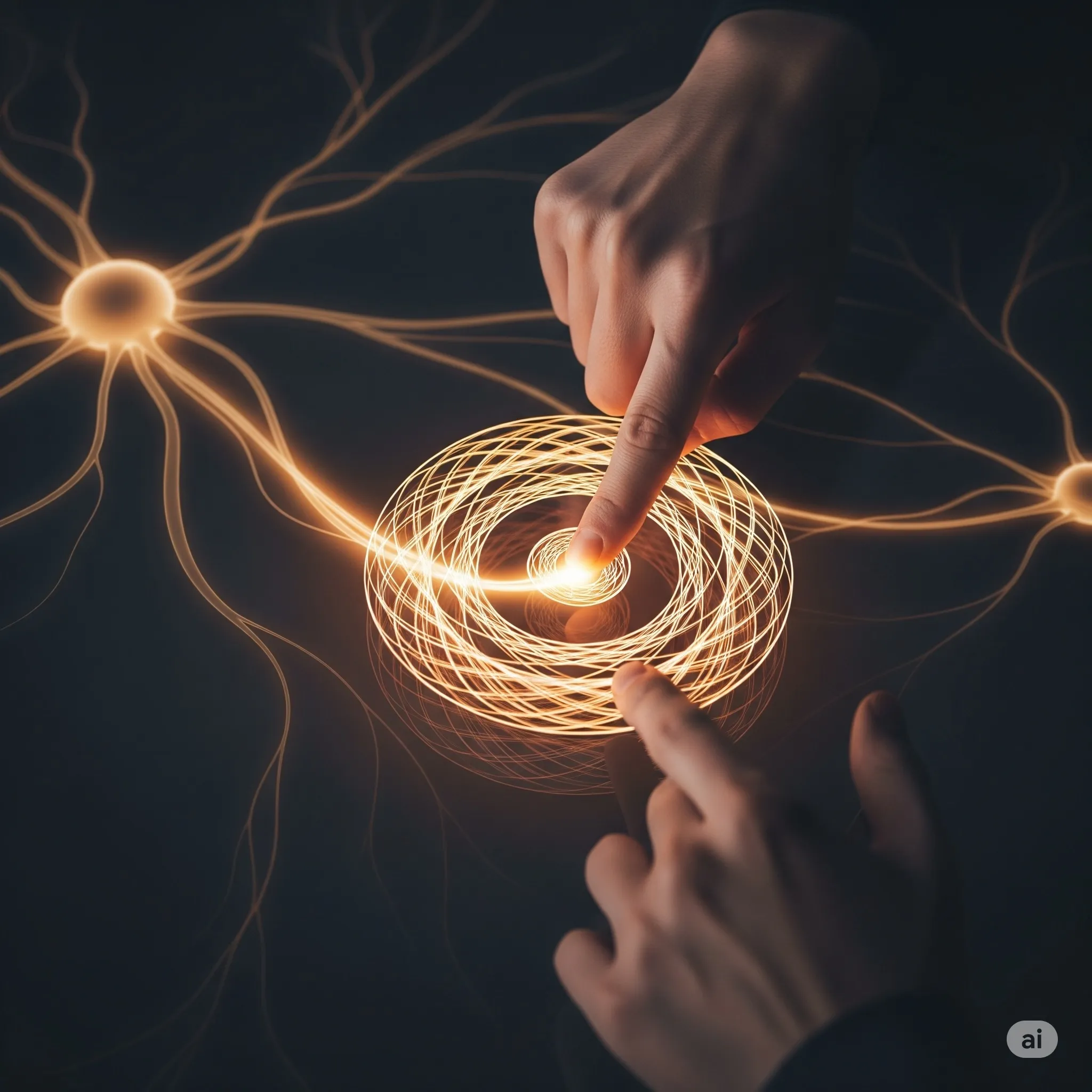
For centuries, Western thought has operated under a fundamental assumption: the mind and body are separate entities, with the mind commanding from above while the body dutifully follows orders. René Descartes crystallized this view with "I think, therefore I am," creating a philosophical divide that has shaped everything from medical practice to how we understand wellness.
But what if Descartes got it wrong?
Modern neuroscience is revealing something our ancestors in various healing traditions knew all along: the mind and body aren't separate at all. They're part of an integrated system where thoughts influence physiology and physical experiences shape mental states. This understanding is revolutionizing how we approach mental health, stress reduction, and overall wellbeing.
Enter tracing meditation—a practice that doesn't just acknowledge this mind-body connection but actively harnesses it. By combining the physical act of tracing with mindful attention, this approach offers a scientifically grounded path to calm that's accessible to virtually anyone.
The Power of Mindful Movement
The evidence for mindful movement is overwhelming. Decades of research on practices like yoga and traditional martial arts have demonstrated their effectiveness at improving both subjective wellbeing and measurable health markers. These ancient practices work because they engage both mind and body simultaneously, creating a unified experience that quiets mental chatter while promoting physical relaxation.
The challenge? Most mindful movement practices require significant space and physical capability. Try doing a proper sun salutation in an airplane seat or executing martial arts forms with limited mobility. It's not exactly practical.
Tracing meditation solves this accessibility problem. As a form of mindful movement, it provides the same mind-body integration benefits but requires minimal space—you can practice on a plane, in bed, or at your desk between meetings. Whether you use your dominant hand or adapt to physical limitations by using your non-dominant hand, the practice remains equally effective. The gentle, controlled movements engage your motor cortex while the focus required quiets the mental noise, creating the same beneficial state achieved by more demanding physical practices.
The beauty lies in its simplicity: your attention naturally anchors on the concrete, immediate sensation of the stylus or finger moving across the surface. Unlike trying to focus on something as abstract as "your breath" or "the present moment," you have a clear, tangible point of focus that makes maintaining mindful attention almost effortless.
Art as Therapy
The therapeutic power of creative expression has been recognized and studied extensively since art therapy emerged in the mid-20th century. What started as an intuitive understanding—that creating art could be healing—has evolved into a robust field with solid empirical support.
Research has consistently shown art therapy's effectiveness across diverse settings: cancer wards where patients find respite from treatment anxiety, child psychology practices where young minds process trauma through creation, and inpatient behavioral health facilities where artistic expression becomes a bridge to emotional regulation. The evidence base is particularly strong for specific practices closely related to tracing meditation.
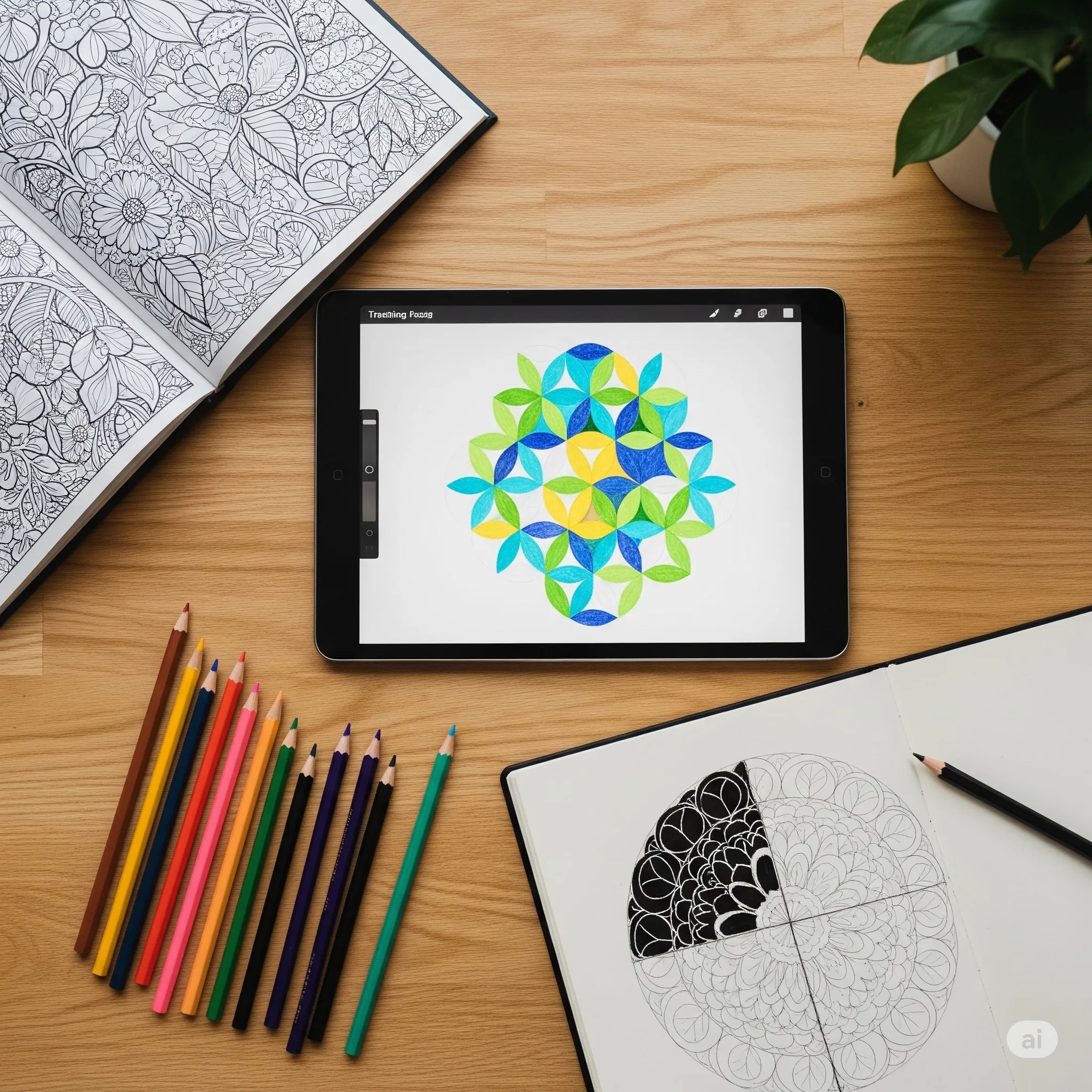
Studies on coloring—perhaps the most accessible form of artistic mindfulness—have documented significant reductions in trait anxiety. Research on mandala drawing shows measurable decreases in cortisol, the body's primary stress hormone. Even more relevant, studies on tracing labyrinths have demonstrated improvements not just in stress markers but in social interactions and overall emotional wellbeing.
What makes these findings so compelling is that they don't require artistic talent or training. The therapeutic benefits come from the process itself—the focused attention, the gentle movements, the integration of mind and body through creative expression. Tracing meditation captures all of these elements while making the practice even more accessible. You don't need to design a mandala or find a labyrinth; you simply need to follow the lines in front of you, letting your attention rest in the immediate experience of creation.
Calligraphy and Cognitive Health
Perhaps the most directly relevant research comes from studies of calligraphic handwriting, particularly in Chinese traditions where the practice has been refined over millennia. This research reveals something remarkable: the act of mindful writing doesn't just reduce stress—it actively protects and enhances cognitive function.
Studies conducted across diverse populations, from Hong Kong to Beijing to California, have found that Chinese calligraphic handwriting serves as an effective intervention for college students struggling with anxiety. The practice helps them develop better emotional regulation while improving their ability to handle academic stress. For older adults, the benefits extend even further: regular calligraphy practice appears to help stave off cognitive decline, suggesting that the mind-body integration involved in mindful writing has neuroprotective effects.
Perhaps the most compelling evidence comes from a randomized controlled trial conducted in Turkey, where researchers studied the impact of structured calligraphy sessions on mental health. Participants who engaged in 60-minute calligraphy sessions three times a week showed measurable improvements in both trait anxiety and depression after just three weeks. The researchers concluded that calligraphy showed genuine promise as a treatment modality for common mental health conditions.
The challenge with traditional calligraphy, however, is the steep learning curve. Mastering the brush strokes, understanding the cultural context, and developing the necessary motor control can take years. Many people find the initial barrier too daunting to overcome.
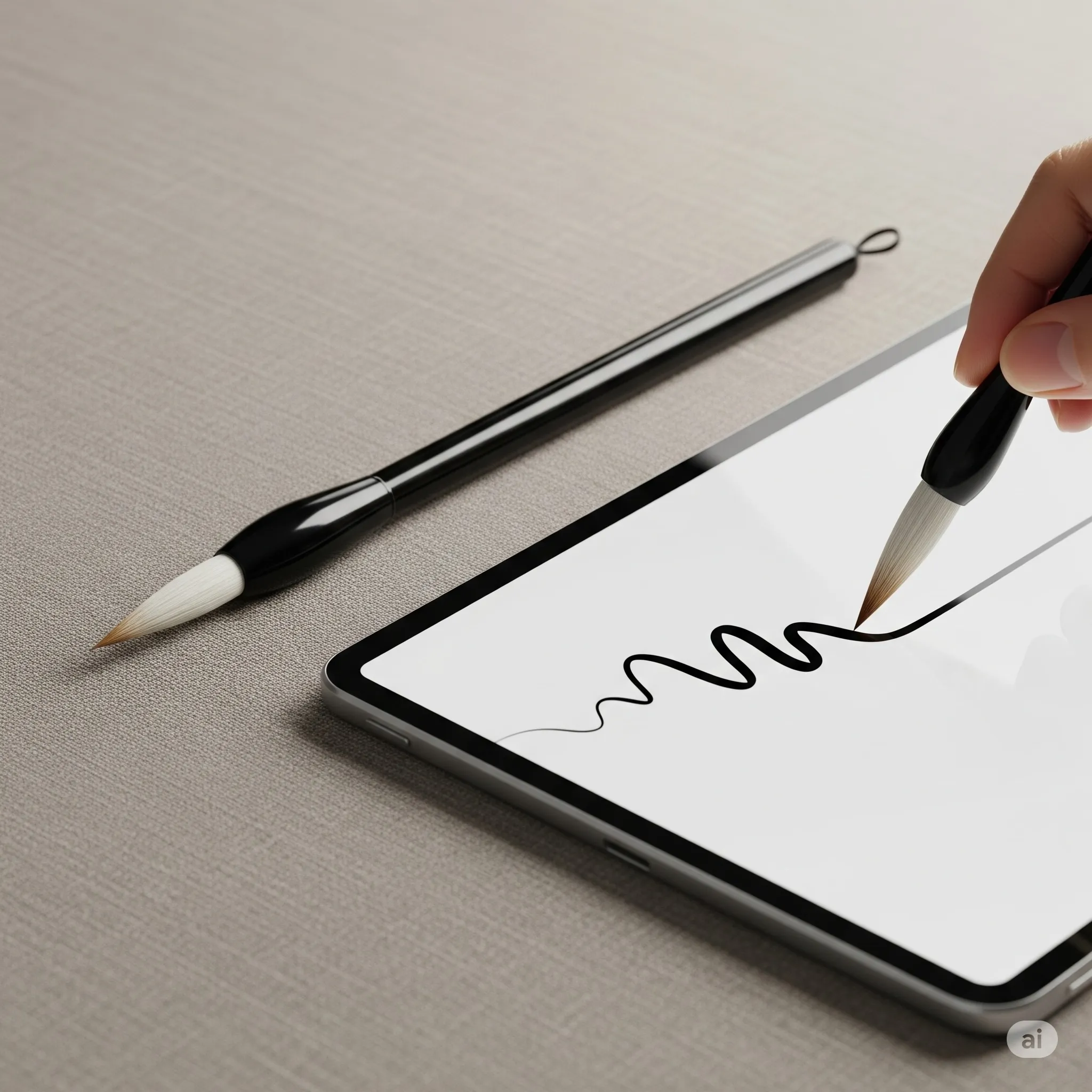
Tracing meditation offers a direct path to these same cognitive and emotional benefits without the intimidating learning curve. Instead of spending months learning proper brush technique, you can begin immediately with whatever drawing implement feels comfortable. The neurological benefits—the integration of focused attention, fine motor control, and aesthetic appreciation—remain the same whether you're creating original calligraphy or mindfully tracing existing images.
A New Evidence-Based Approach
Tracing meditation isn't just another wellness trend. It's a practice that stands firmly on the shoulders of multiple scientific disciplines, combining insights from neuroscience, psychology, art therapy, and contemplative research into a single, accessible approach.
The convergence is remarkable: whether researchers are studying ancient calligraphic traditions, modern art therapy interventions, or the neurophysiology of mindful movement, they consistently find that practices combining focused attention with gentle physical movement produce measurable improvements in mental health and cognitive function. Tracing meditation synthesizes these findings into a practice that anyone can begin today.
What makes this approach particularly promising is how it addresses the common barriers that prevent people from establishing a mindfulness practice. Too restless for seated meditation? The gentle movement provides a perfect outlet. Intimidated by the artistic requirements of traditional art therapy? The pre-existing guides eliminate performance anxiety. Lacking the space or mobility for yoga or martial arts? Tracing requires only a small surface and can accommodate virtually any physical limitation.
The science is clear: our minds and bodies are not separate entities but part of an integrated system that responds beautifully to practices that honor this connection. Tracing meditation offers a uniquely accessible way to engage this system, promoting the calm and focus that our fast-paced world makes more necessary than ever.
Experience the science of calm for yourself. Start your first tracing session with Ibiss today.