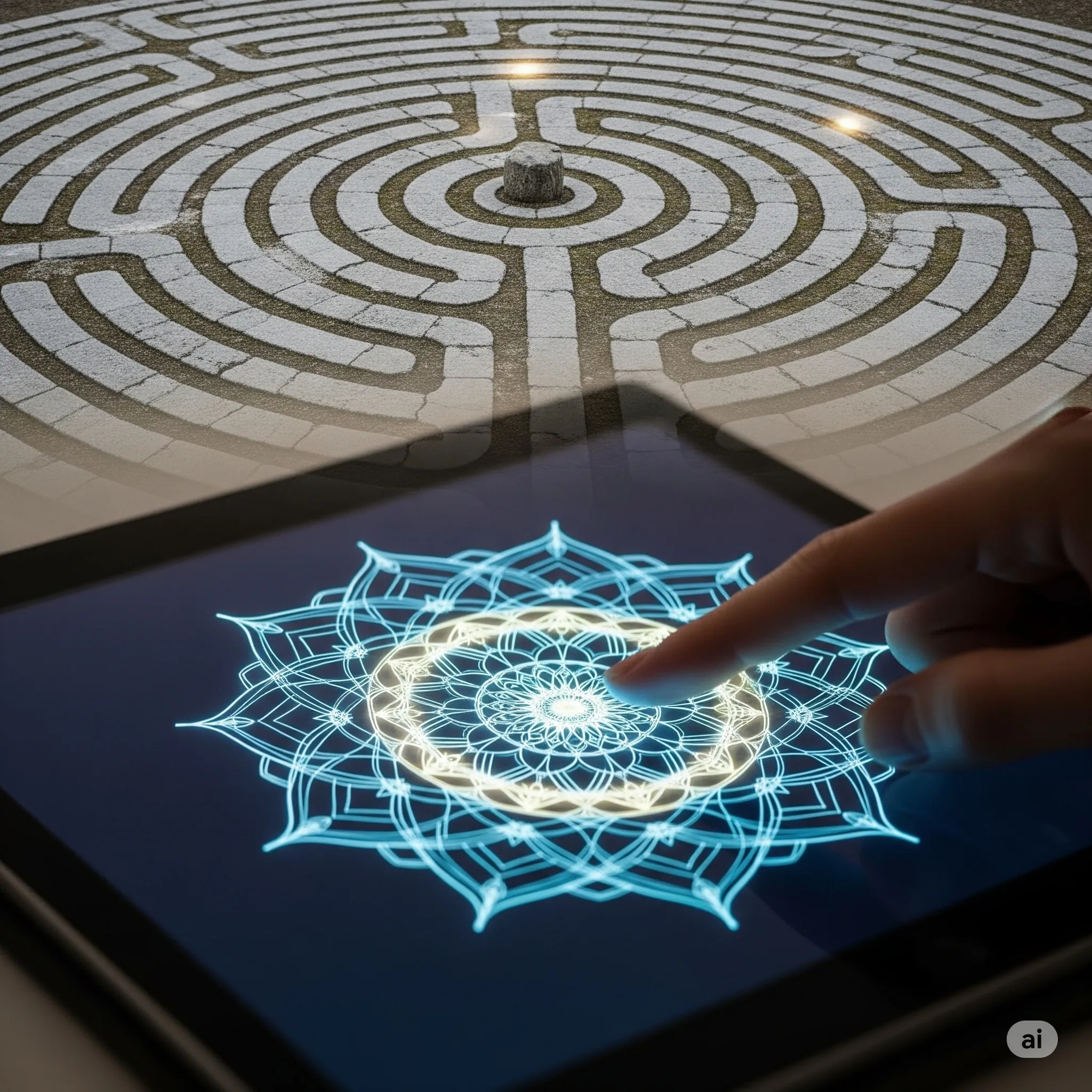
When you settle in for a tracing meditation with Ibiss, your finger following the curves of a mandala or the gentle turns of a Celtic knot, you're participating in something far more ancient than any smartphone app. The simple act of mindfully following a pattern connects you to millennia of contemplative practice, from medieval monks walking stone labyrinths to Tibetan masters creating intricate sand mandalas.
Your practice isn't just modern mindfulness—it's a direct continuation of humanity's oldest forms of moving meditation.
The Sacred Path: Labyrinth Walking Through the Ages
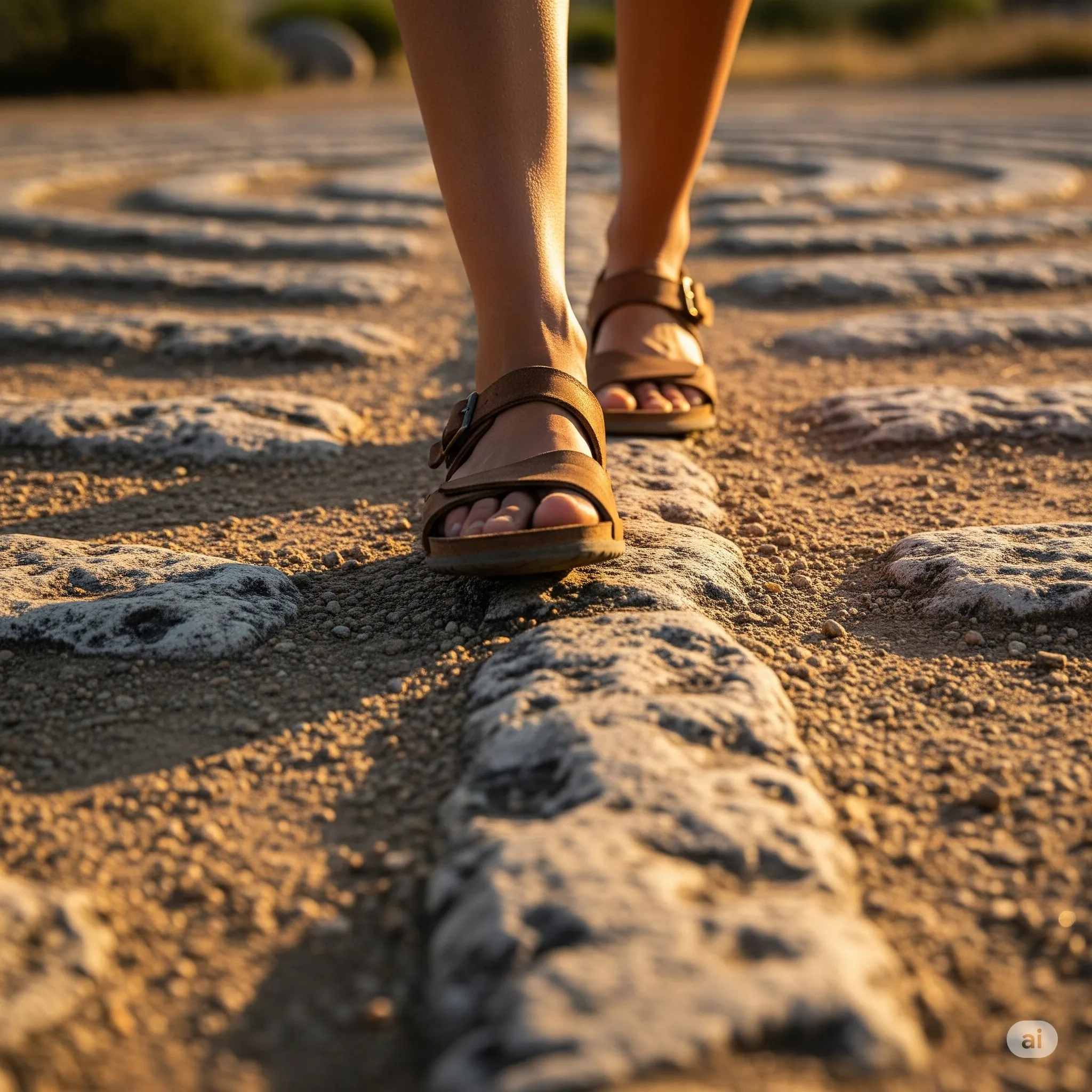
Long before meditation apps existed, contemplatives found focus through the ancient art of labyrinth walking. Unlike a maze designed to confuse, a labyrinth offers a single, winding path that leads inevitably to the center and back out again. This deceptively simple pattern has served as a contemplative tool for over 4,000 years, appearing in cultures from ancient Greece to medieval Christianity.
The labyrinth at Chartres Cathedral, completed around 1200 CE, stands as perhaps the most famous example of this contemplative technology. Medieval pilgrims who couldn't journey to Jerusalem would instead "walk to Jerusalem" by following the labyrinth's 11 circuits, each step a prayer, each turn a moment of surrender. The 40-foot diameter path compressed a spiritual pilgrimage into a manageable space, much like how tracing meditation brings ancient contemplative wisdom into the palm of your hand.
But the labyrinth's power wasn't merely symbolic. The rhythmic walking, the need to follow the prescribed path without shortcuts, and the meditative quality of the journey created what we would now recognize as a classic mindfulness practice. The walker's attention remained anchored on their feet, their breath, and their forward movement—exactly the kind of present-moment awareness that tracing meditation cultivates as you follow the lines on your screen.
The parallels are striking: both practices involve following a predetermined pattern, both require sustained attention to movement, and both transform the simple act of "following along" into a doorway to contemplative awareness. When you trace a digital labyrinth with Ibiss, you're walking the same spiritual territory that Christian mystics explored for centuries, just translated into a form that fits modern life.
The Circle of Wisdom: Mandalas and Sacred Geometry
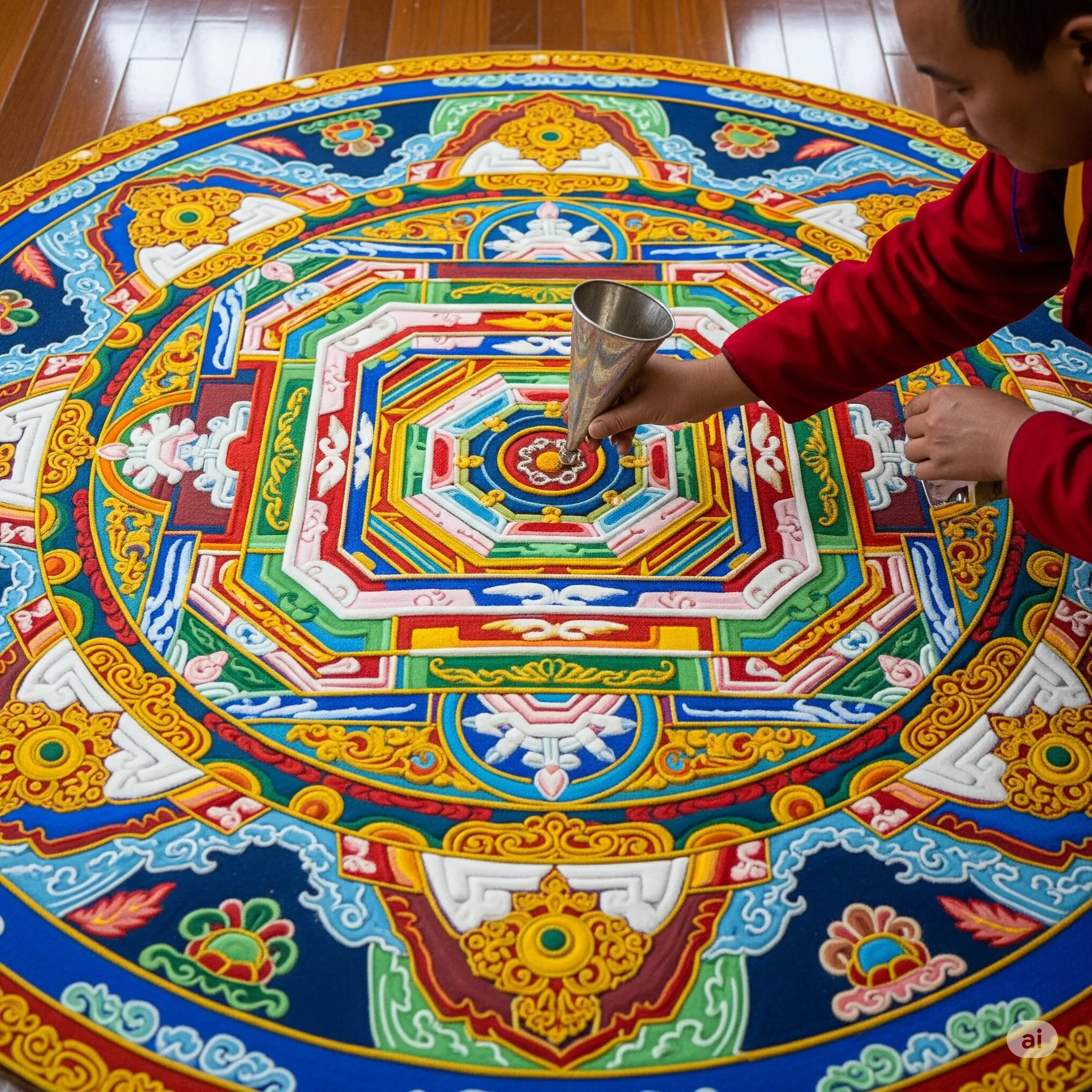
While Western contemplatives walked labyrinths, Eastern traditions developed their own form of pattern-based meditation: the mandala. From the Sanskrit word meaning "circle" or "completion," mandalas represent the cosmos in Hindu and Buddhist cosmology, but their contemplative power extends far beyond their symbolic meaning.
In Tibetan Buddhism, monks spend weeks creating elaborate sand mandalas grain by grain, their absolute focus on each tiny placement serving as intensive meditation practice. The irony isn't lost on practitioners: these breathtakingly beautiful works are destroyed upon completion, teaching impermanence even as they cultivate unwavering concentration. Carl Jung, who popularized mandala creation in Western psychology, observed that drawing these circular patterns seemed to naturally quiet the mind and promote psychological integration.
Modern research has validated what contemplative traditions knew intuitively. Studies have shown that creating mandalas reduces anxiety and promotes a meditative state, with participants reporting decreased stress and increased feelings of calm after mandala-drawing sessions. The act of following circular patterns, whether drawn in sand or traced on a screen, appears to naturally synchronize brain waves and promote the relaxation response.
When you select a mandala for your tracing meditation, you're tapping into this same neurological pathway. Your finger follows the ancient geometries that have centered minds for millennia, from the rose windows of Gothic cathedrals to the rangoli patterns drawn daily in Indian homes. The technology is new, but the essential practice—following sacred forms with meditative attention—remains unchanged.
The Flowing Line: Calligraphy as Moving Meditation
Perhaps no tradition bridges the gap between ancient contemplative practice and modern tracing meditation more directly than calligraphy. Across cultures, the practice of mindful writing has served as both artistic expression and spiritual discipline, from Chinese scholars practicing the "Way of the Brush" to medieval scribes illuminating sacred texts.
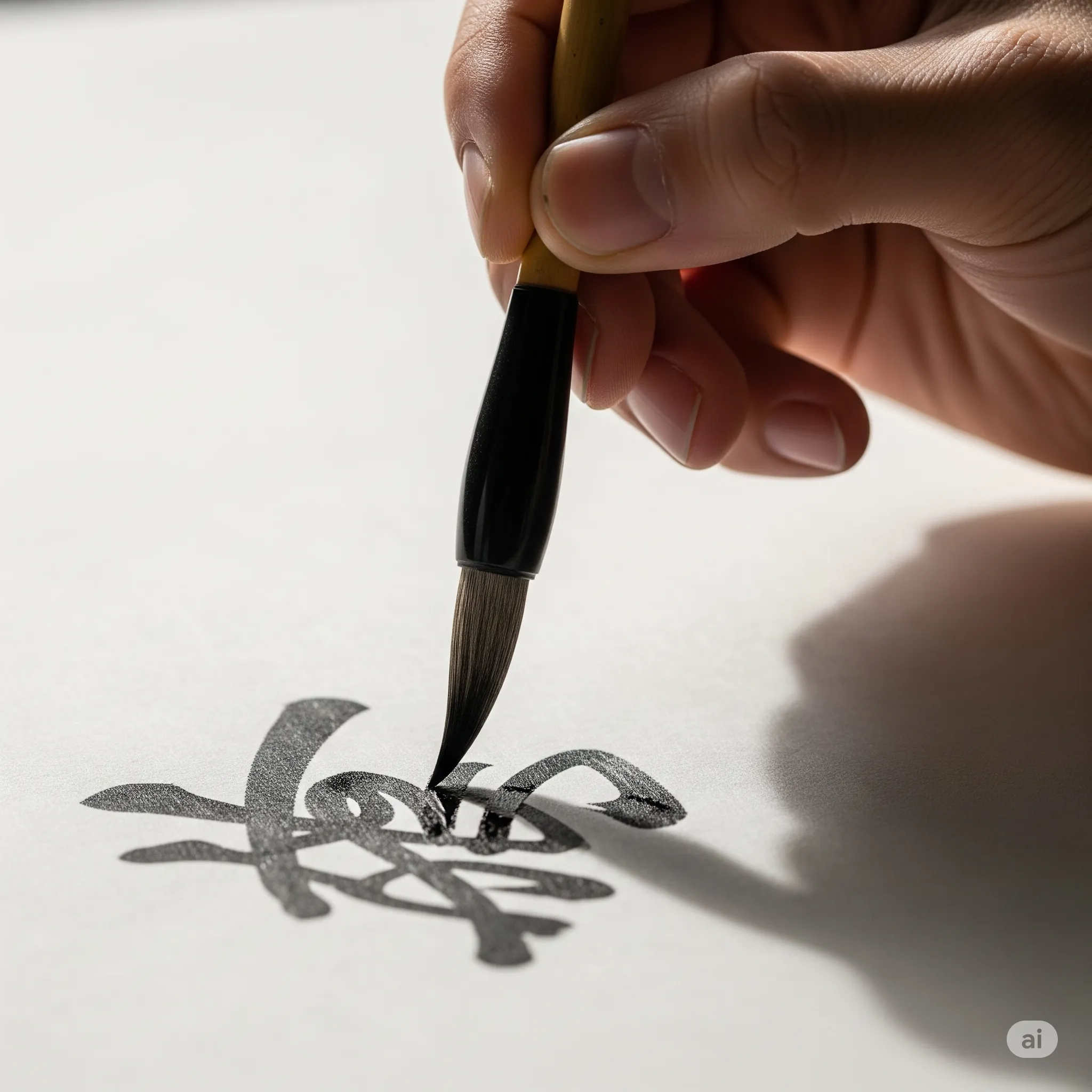
In Chinese tradition, calligraphy is considered one of the highest art forms, but it's also explicitly recognized as a form of meditation. The practitioner must cultivate what's called "yi qi shen"—unity of mind, breath, and spirit—before even touching brush to paper. Each stroke requires complete presence; there's no erasing, no going back, only flowing forward with total commitment to the present moment. Traditional masters describe this state as "forgetting the self" while paradoxically developing perfect self-control.
Islamic calligraphy developed similar contemplative dimensions, with practitioners viewing the formation of sacred texts as a form of worship. The famous 9th-century calligrapher Ibn Muqla wrote that proper calligraphy required not just technical skill, but a purified heart and focused mind. The rhythmic flow of Arabic script, with its emphasis on proportion and balance, naturally induced meditative states in dedicated practitioners.
Even Western traditions embraced writing as contemplation. The illuminated manuscripts produced in medieval monasteries—like the stunning Book of Kells with its intricate Celtic knotwork—represented hundreds of hours of meditative focus. Each carefully formed letter, each delicate ornament, served as both prayer and mindfulness practice for the monk-scribes who created them.
Modern research has validated these traditional insights. Studies of Chinese calligraphy practice show measurable reductions in stress hormones and improvements in attention and emotional regulation. The key factors? Sustained focus on hand movement, rhythmic breathing, and present-moment awareness—exactly the elements that make tracing meditation effective.
Ancient Wisdom, Modern Practice: Tracing as Contemplative Continuation
The thread connecting ancient labyrinth walkers, mandala creators, and master calligraphers to modern tracing meditation practitioners isn't just metaphorical—it's neurological. All these practices share common elements that researchers now understand promote contemplative states: focused attention on movement, following predetermined patterns, and the integration of mind and body awareness.
What's remarkable about tracing meditation is how it distills these ancient practices into their essential components. You don't need to travel to Chartres Cathedral or spend years learning brush techniques. You don't need to memorize complex symbolism or master traditional forms. The contemplative power lies not in the external trappings, but in the fundamental act of mindfully following a meaningful pattern.
When you open Ibiss and select an image to trace, you're accessing the same neural pathways that medieval pilgrims activated walking stone labyrinths. Your finger moving across the screen engages the same mind-body integration that Chinese calligraphers cultivated through decades of practice. The circular patterns you trace activate the same centering response that Tibetan monks achieve through mandala creation.
This isn't to diminish the profound cultural and spiritual significance of traditional practices—rather, it's to recognize that their contemplative core is more accessible than we might imagine. The sacred isn't confined to ancient temples or traditional art forms; it emerges whenever we bring complete attention to the present moment, whether we're walking a labyrinth path or tracing it with our finger on a screen.
Your Place in the Contemplative Lineage
The next time you settle into a tracing meditation, remember that you're joining a conversation that stretches back millennia. The Celtic monks who created the Book of Kells, the Buddhist masters who perfected mandala arts, the medieval pilgrims who walked cathedral labyrinths—all discovered the same truth you're accessing: that following sacred forms with mindful attention can quiet the monkey mind and open doorways to contemplative awareness.
Your smartphone or tablet isn't a departure from traditional practice—it's the latest chapter in humanity's ongoing exploration of contemplative technology. The same impulse that led ancient craftspeople to carve labyrinth patterns into stone floors now drives developers to create apps that make these practices accessible to anyone, anywhere.
In a world that often feels disconnected from historical wisdom, tracing meditation offers a bridge. Each session connects you to the unbroken lineage of contemplatives who discovered that peace lies not in thinking harder, but in learning to focus the mind through gentle, purposeful movement. The tools have evolved, but the essential practice remains: following the line, breathing with the movement, and finding the calm center that exists in every present moment.
Whether you trace for two minutes between meetings or fifteen minutes as part of your morning routine, you're participating in one of humanity's oldest and most universal forms of contemplative practice. The ancient wisdom is there in your fingertips, waiting to guide you toward the same insights that contemplatives have discovered for thousands of years.
Ready to join this timeless tradition? Your first tracing meditation is just a tap away.