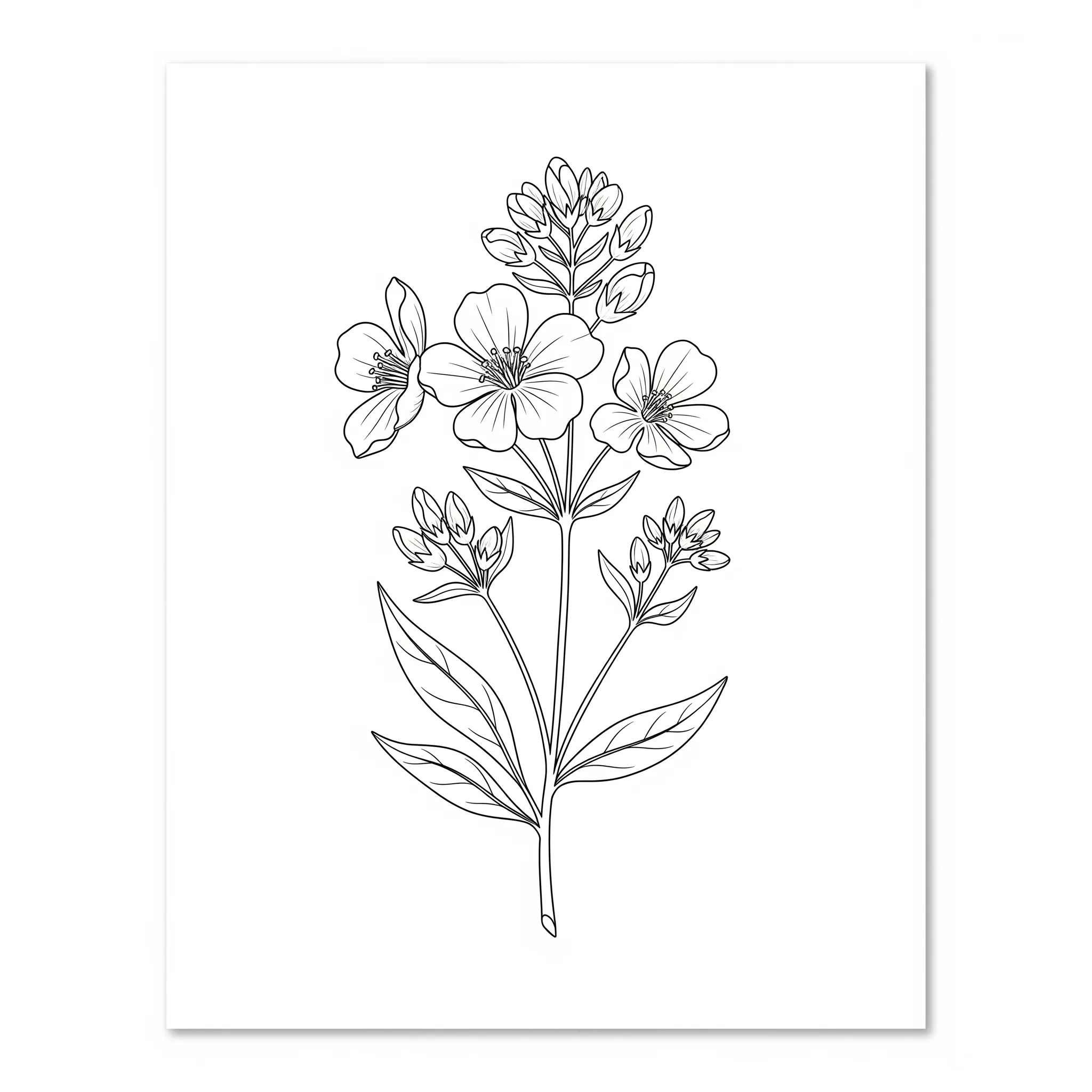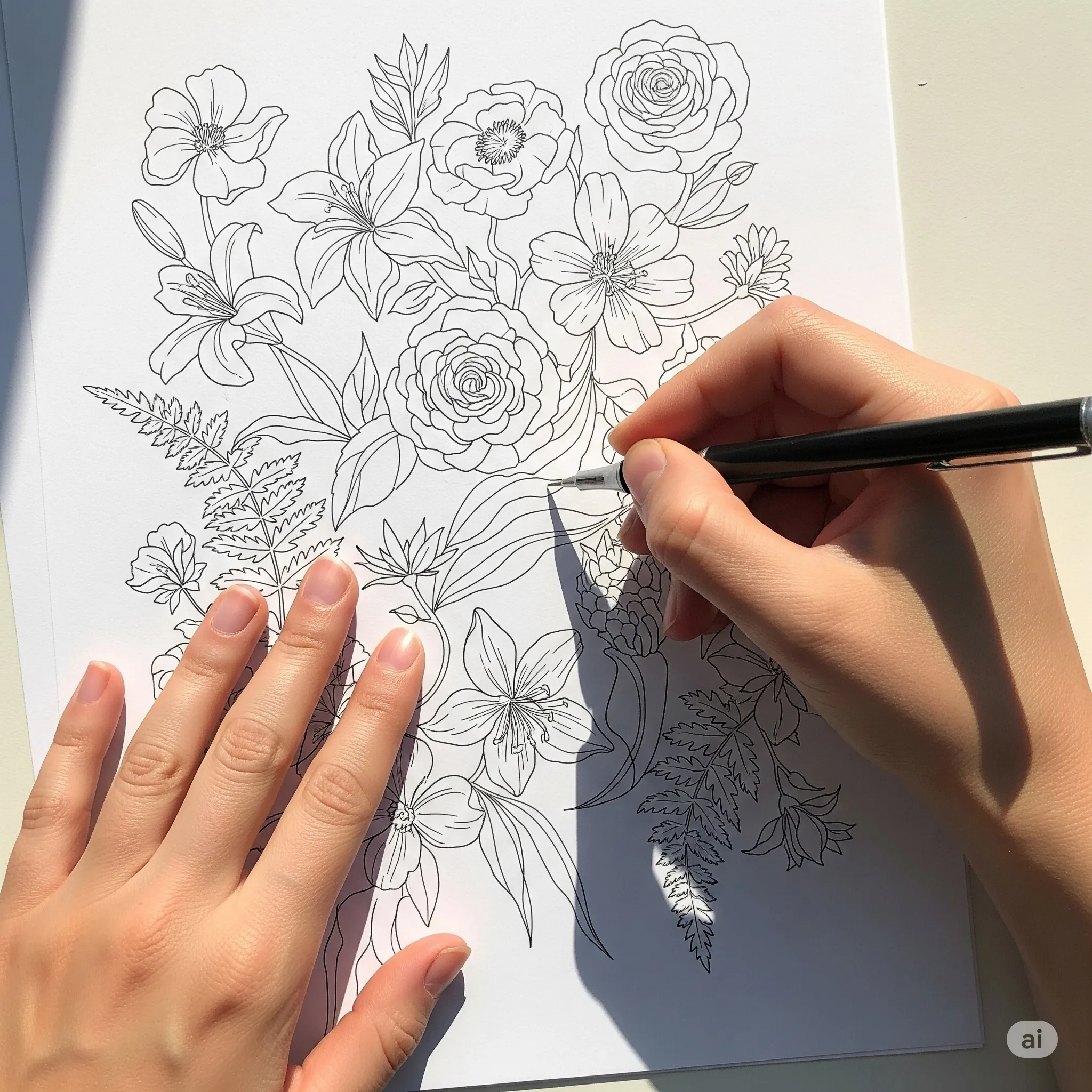
You know that feeling when someone suggests an art class and your immediate response is "Oh, I'm not artistic at all"? Or when you see a beautiful painting and think "I could never do that"? You're not alone. Most of us have convinced ourselves that creativity is reserved for a select few who were born with some magical artistic gene the rest of us missed out on.
But here's the thing: creativity isn't about producing museum-worthy masterpieces. It's about the joy of making something with your hands, the meditative flow of focused attention, and the simple pleasure of watching lines appear on a page. And tracing—yes, the same activity you probably did as a child—offers all of these benefits without the intimidating blank canvas or the voice in your head critiquing every mark you make.
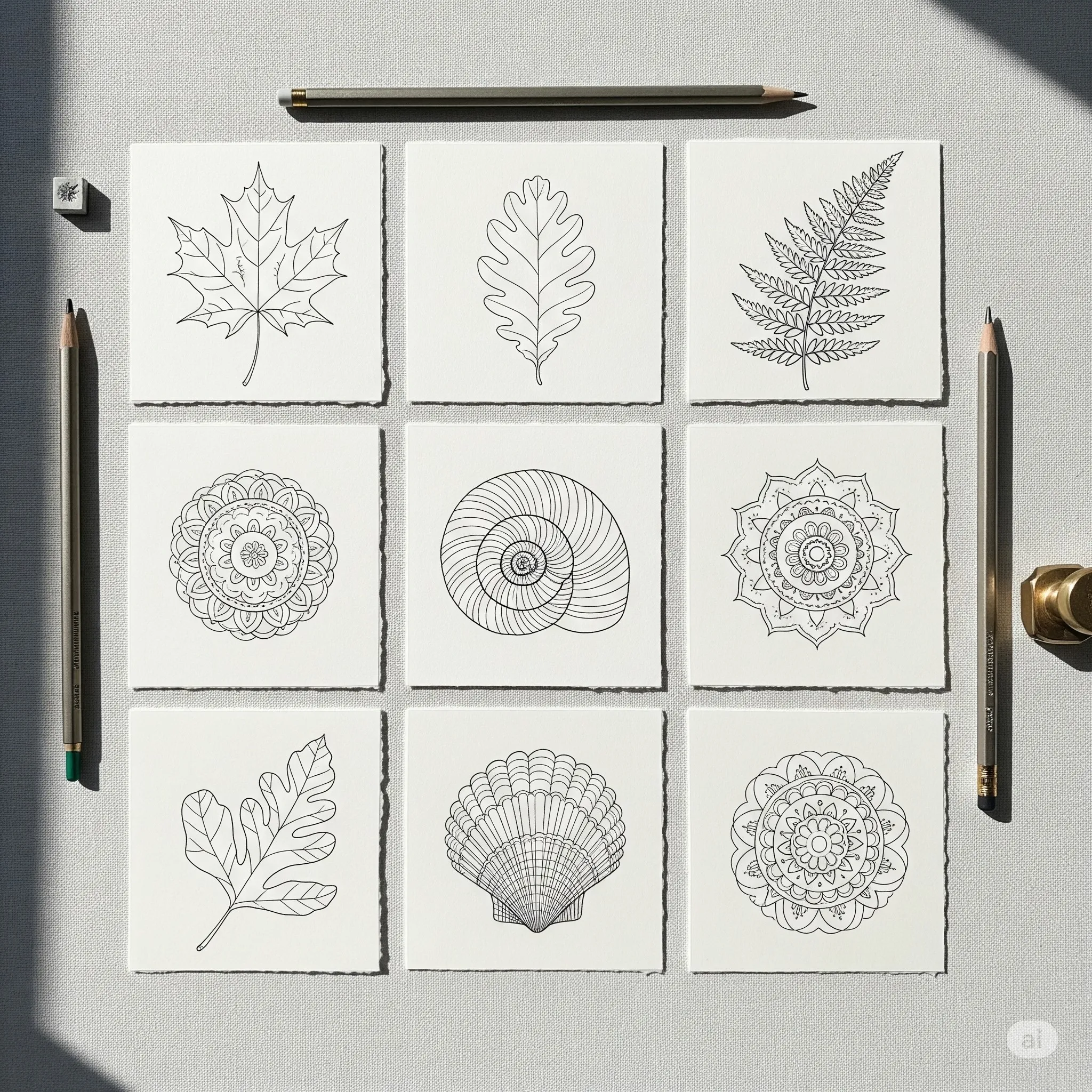
Focus on the Experience, Not the Outcome
Traditional art can feel overwhelming because it puts all the pressure on the final product. Will it look "right"? Will people think it's good? Am I wasting my time if I'm not naturally talented? Tracing flips this script entirely.
When you trace an image, you're following a guide that's already been created. This simple shift changes everything. Instead of worrying about where the next line should go or whether your proportions are correct, you can focus entirely on the physical sensation of your pen moving across the paper (or your finger across the screen). You can pay attention to the weight of your hand, the texture of the surface, the rhythm of your breathing as you follow each curve and line.
This is what mindfulness practitioners call "present moment awareness"—and it's incredibly therapeutic. Research shows that when we focus on physical sensations and movement, we naturally quiet that internal critic that loves to point out our shortcomings. The monkey mind that usually chatters about our to-do lists or yesterday's embarrassments gets so absorbed in the simple act of tracing that it finally gives us some peace.
Made a mistake? Keep going. It's just an extra line (or two, or ten), after all. Your goal isn't to create a perfect reproduction—it's simply to trace. This emphasis on process over product is liberating in a way that few other activities can match.
Access the Benefits of Art Therapy
Art therapy has been helping people manage anxiety, depression, and stress for decades. In cancer wards, child psychology offices, and mental health facilities, creative expression is used as a powerful tool for healing and wellbeing. Studies have shown that activities like drawing mandalas, coloring, and yes, tracing, can lower cortisol levels, reduce anxiety, and even improve social interactions.
But here's the catch: many people feel shut out of these benefits because they believe they're "not artistic enough." They see art therapy and think it requires some baseline level of creative skill they don't possess. Tracing changes this equation completely.
Unlike painting or drawing from scratch, tracing doesn't require you to be "artistic" in the traditional sense. Even if your hand shakes, even if you've never held a paintbrush with confidence, even if you're convinced you can't draw a straight line—tracing works. The guide is there to support you, making the process accessible to anyone willing to put pen to paper.
This accessibility is crucial because it means you don't have to wait until you develop artistic skills to start experiencing the mental health benefits of creative expression. You can start today, with whatever level of coordination and confidence you currently have, and begin reaping the rewards immediately.
Nurture a "Beginner's Mind"
In Buddhist philosophy, there's a concept called "beginner's mind"—approaching each experience with fresh eyes, free from preconceptions or past attachments. It's about being fully present and open to what's happening right now, rather than filtering everything through the lens of what we think we already know.
Tracing offers a unique opportunity to cultivate this mindset. You might think that tracing the same image repeatedly would be boring, but the opposite is often true. Each time you approach a familiar image, you have the chance to notice something new: a curve you hadn't fully appreciated, a corner that challenges your hand in a different way, a rhythm that emerges as you move through the lines.
This isn't about mindless repetition—it's about mindful repetition. Each tracing session becomes an opportunity to let go of your previous relationship with the image and encounter it fresh. Maybe today you notice how the lines flow together, while yesterday you were focused on the individual shapes. Maybe this morning you trace with calm, steady movements, while this afternoon your hand moves with more energy and spontaneity.
This practice of returning to the same image with fresh attention mirrors some of the deepest teachings about mindfulness and presence. It's a gentle way to train your mind to find richness and meaning in simplicity, to discover that "boring" repetition can actually be a gateway to profound awareness.
The Perfect Creative Balance
Tracing offers something that's surprisingly rare in our achievement-oriented culture: the pure joy of creating without the pressure to excel. It's the artistic equivalent of singing in the shower—you do it because it feels good, not because you're auditioning for anything.
For those of us who love Bob Ross's gentle wisdom but know we're not destined to paint happy little trees, tracing provides the perfect middle ground. We get to experience the meditative flow of art-making, the satisfaction of watching something beautiful emerge under our hands, and the mental health benefits of creative expression—all without having to overcome years of artistic training or self-doubt.
Whether you use tracing as a five-minute stress reset between meetings, a longer meditation to start your day, or a creative practice to unwind in the evening, you're participating in something that connects mind, body, and spirit. You're accessing the therapeutic power of art in its most approachable form. And perhaps most importantly, you're giving yourself permission to be creative exactly as you are, without apology or explanation.
So the next time someone mentions creativity and you feel that familiar "I'm not artistic" response rising up, remember this: you don't need to be the next Picasso to be creative. You just need to be willing to trace a line and pay attention to how it feels. That's not just artistic—it's profoundly human.