
You know the feeling. You sit down for your daily meditation—same cushion, same time, same posture—and instead of the familiar sense of settling into awareness, you feel... nothing. The practice that once felt alive and transformative has become routine, even mechanical. Your mind wanders to your to-do list, or worse, to questioning whether meditation is even helping anymore. If you've been practicing meditation for months or years, this experience isn't just familiar—it's practically inevitable.
Meditation plateaus are one of the most common reasons people abandon their practice entirely, but they don't have to spell the end of your mindfulness journey. Just as athletes cross-train to prevent injury and break through performance barriers, your meditation practice can benefit from incorporating different approaches. Sometimes the key to reigniting your primary practice isn't sitting longer or sitting differently—it's standing up and moving.
Introducing "Micro" Mindful Movement
When we hear "mindful movement," most of us picture yoga studios or walking meditation paths. But what if mindful movement could happen in the space of your coffee table? What if it required nothing more than a pen and paper, or even just your finger and a phone screen?
Tracing meditation represents a new category of mindful movement—one that combines the proven benefits of practices like yoga and walking meditation with unprecedented accessibility. Unlike traditional mindful movement practices that require specific spaces, equipment, or physical capabilities, tracing can be done anywhere: on an airplane, in a hospital bed, during a work break, or even while recovering from an injury that prevents other forms of movement.
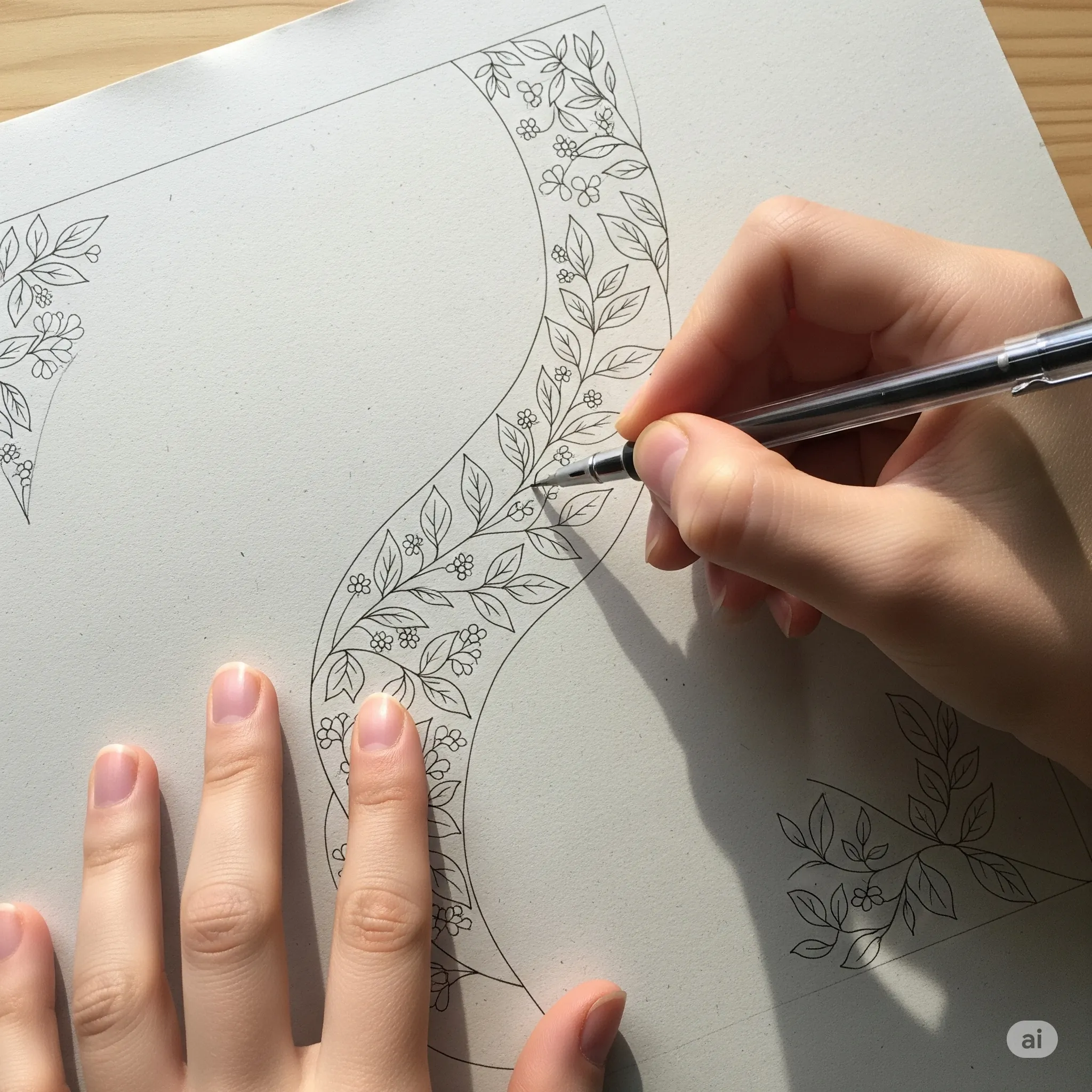
The practice itself is deceptively simple: you trace images mindfully, focusing on the motion of your hand and the point where your finger or stylus meets the surface. But this simplicity is precisely what makes it so powerful for practitioners stuck in a plateau. When your familiar meditation routine has become too familiar, tracing offers a completely different entry point into mindfulness—one that engages your body, your visual system, and your sense of movement all at once.
Breaking Mental Habits
One of the primary reasons meditation practices plateau is that our minds become habituated to the specific patterns of our routine. If you always focus on your breath, your mind learns exactly where to go and how to avoid true presence. If you always do body scans, your awareness might start going through the motions rather than truly investigating what's happening in each moment.
Tracing meditation disrupts these ingrained mental habits by shifting your meditative focus to the physical sensation of movement across a surface. Instead of the subtle, internal focus required for breath awareness, you're tracking the concrete, external movement of your hand. This shift alone can wake up neural pathways that have become dormant in your regular practice.
The continuous movement inherent in tracing also provides a different kind of anchor than static meditation objects. While the breath comes and goes, and bodily sensations arise and pass away, the act of tracing provides a steady stream of sensory information that can be easier to follow when your mind has learned to tune out subtler meditation objects.
Research on neuroplasticity shows us that our brains are constantly reorganizing based on our experiences. When we introduce a new form of mindful attention, we're literally creating new neural pathways and strengthening different networks in the brain. This is why cross-training in meditation, just like cross-training in athletics, can lead to improvements that transfer back to your primary practice.
A New Kind of Body-Mind Connection
Traditional seated meditation has its roots in contemplative traditions that often emphasized transcending or moving beyond the body. But modern neuroscience and somatic therapies have revealed just how interconnected our minds and bodies really are. Trauma lives in the body. Emotions have physical signatures. And sometimes the pathway to mental clarity runs directly through physical experience.
Tracing meditation draws on this understanding, incorporating elements from both somatic therapy and art therapy. In somatic approaches, practitioners work with the body's sensations and movements as a way of processing psychological material. Art therapy uses creative expression to access insights and healing that purely cognitive approaches might miss. Tracing meditation combines both: you're engaging in mindful movement while simultaneously creating visual art.
This integration offers a different pathway to insight than purely cognitive or breath-focused practices. Where traditional meditation might help you observe your thoughts, tracing meditation helps you observe your impulses, your relationship with imperfection, your tendency to rush or slow down, and your capacity for sustained attention—all through the lens of physical movement and visual creation.
The mind-body integration in tracing can be particularly powerful for practitioners who have become overly heady in their primary practice. If your meditation has become a mental exercise divorced from bodily experience, the concrete physicality of tracing can help you remember that mindfulness isn't just about your thoughts—it's about your whole being's relationship with the present moment.
The Science of Sensory Engagement
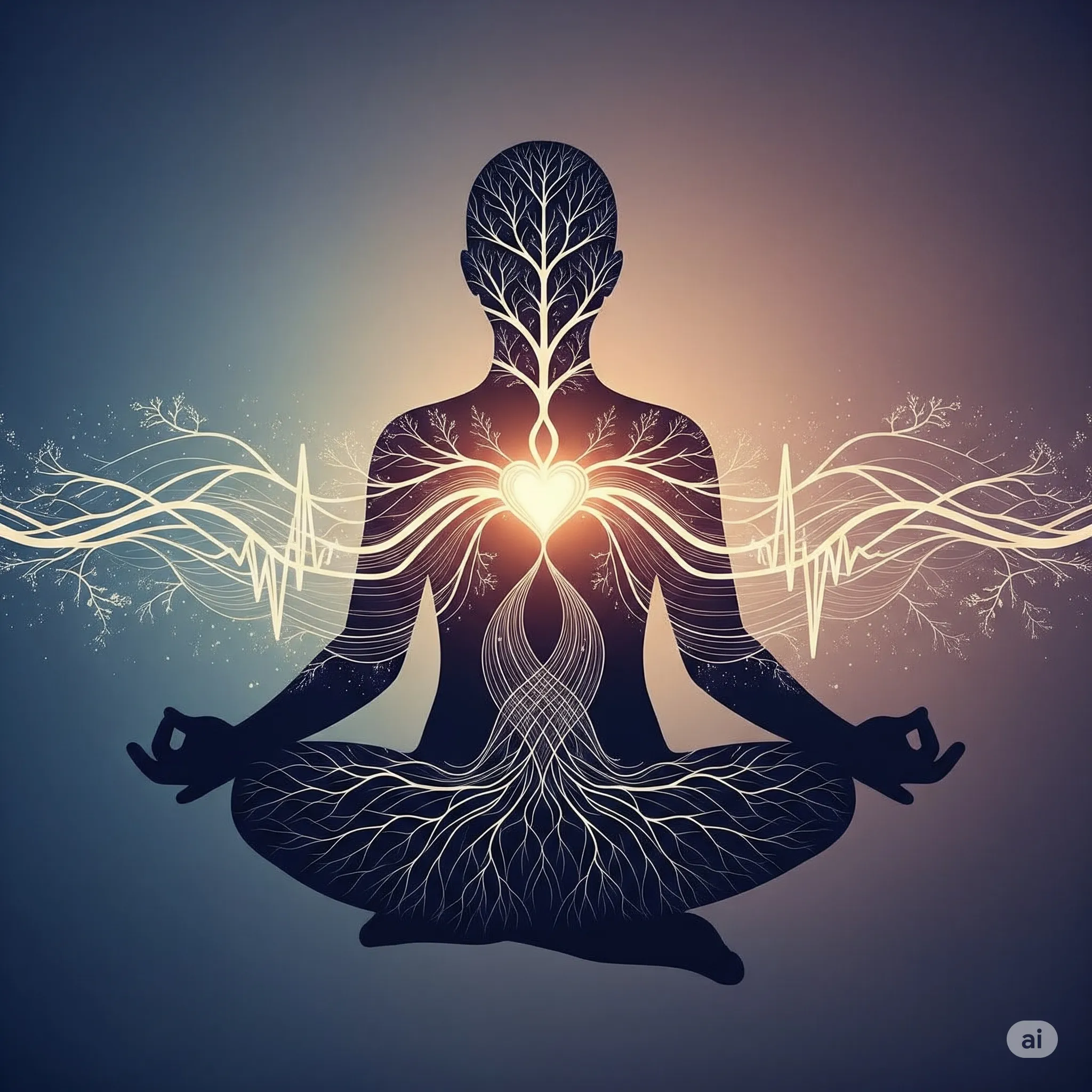
Recent research on the default mode network—the brain system associated with mind-wandering and self-referential thinking—suggests that engaging multiple senses simultaneously can be particularly effective at quieting mental chatter. When you're tracing, you're simultaneously engaging your visual system (tracking the lines), your proprioceptive system (sensing where your hand is in space), your tactile system (feeling the stylus or finger against the surface), and potentially your auditory system if there's a subtle sound as you trace.
This multi-sensory engagement creates what researchers call "embodied attention"—awareness that involves your whole being rather than just your cognitive faculties. For practitioners who have been working primarily with single-pointed attention practices, this broader, more embodied form of awareness can feel refreshingly different and surprisingly stabilizing.
Studies on calligraphy and drawing have shown measurable improvements in anxiety, depression, and cognitive function. While tracing meditation hasn't been extensively studied on its own, it draws from these same mechanisms: the coordination of fine motor movement, the aesthetic engagement with visual forms, and the sustained attention required to follow a line from beginning to end.
Rediscovering Beginner's Mind
One of the most profound aspects of introducing tracing meditation to an established practice is how it can restore what Zen practitioners call "beginner's mind"—that sense of curiosity and fresh engagement that makes meditation feel alive rather than mechanical.
When you trace your first image, you're genuinely learning something new. Your hand might be unsteady, your attention might jump around, and you might find yourself surprised by which aspects of the practice capture your attention. This direct encounter with not-knowing can be incredibly refreshing for practitioners whose primary meditation has become predictable.
The learning process itself becomes part of the meditation. Are you rushing to complete the image, or savoring each line? Do you become frustrated with imperfections, or can you let them simply be part of your creation? Do you find yourself thinking about what the final product will look like, or can you stay present with each moment of the tracing process?
These questions aren't abstract philosophical inquiries—they arise naturally from the practice itself, giving you fresh material for insight and self-observation.
Cross-Training Your Awareness
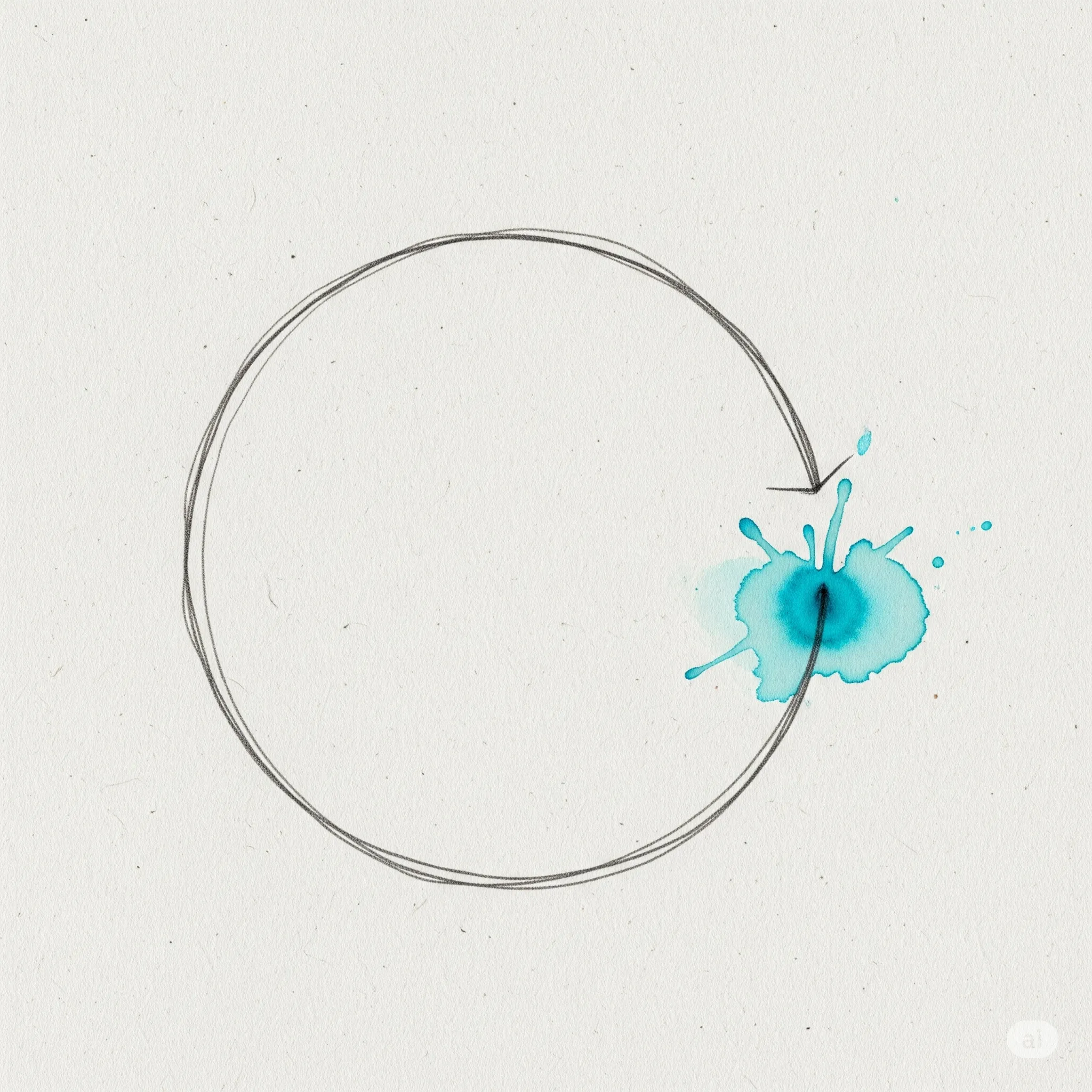
Just as runners benefit from swimming and cyclists benefit from yoga, your meditation practice can benefit from the different qualities of attention that tracing meditation develops. The sustained, flowing attention required for tracing can enhance your ability to maintain awareness during longer sits. The acceptance of imperfection that tracing naturally teaches can help you be gentler with yourself when your primary practice feels difficult.
Most importantly, tracing meditation can help you remember that mindfulness isn't confined to your meditation cushion or your formal sitting practice. When you can trace mindfully, you're developing the capacity to bring that same quality of present-moment attention to any activity—washing dishes, walking to your car, having a conversation with a loved one.
The goal isn't to replace your primary practice with tracing meditation, but to use tracing as a tool for revitalizing your relationship with mindfulness itself. Some practitioners find that a few minutes of tracing before their regular meditation helps them settle more quickly. Others use tracing as a midday reset that helps them return to their evening meditation with fresh energy. Still others alternate between different practices on different days, keeping their overall approach to mindfulness dynamic and engaged.
Getting Started with Tracing
If you're ready to experiment with adding tracing meditation to your practice, the barrier to entry is remarkably low. You can begin with nothing more than a simple line drawing printed on paper and a pen or pencil. Choose images that feel calming or interesting to you—nature scenes, geometric patterns, or traditional mandala designs all work well.
For a more integrated experience, apps like Ibiss offer libraries of traceable images specifically chosen for their meditative qualities, along with features that let you track your emotional state and see how your attention changes throughout a session.
Start small—even two to five minutes of mindful tracing can offer insights and refreshment. Pay attention to the sensation of the pen or stylus moving across the surface, the visual pathway your hand is following, and the rhythm of your breathing as you trace. When your mind wanders (and it will), gently return your attention to the point where your implement meets the surface.
Breathing New Life into Practice
The ultimate test of any meditation technique isn't whether it feels good in the moment, but whether it supports your larger journey of awakening and wellbeing. If your current practice has become stagnant, introducing elements of mindful movement through tracing can provide the spark needed to reignite your curiosity and engagement.
Remember, there's no such thing as a perfect meditation or a perfect meditator. Plateaus are a natural part of any contemplative journey, and they often signal that you're ready for the next phase of development. By approaching your practice with the same spirit of experimentation and openness that brought you to meditation in the first place, you might find that a simple shift—from sitting still to moving mindfully—opens up entirely new dimensions of awareness and insight.
The path of mindfulness is ultimately about cultivating a more intimate and skillful relationship with the full spectrum of your experience. Sometimes that relationship needs the stillness of seated meditation. Sometimes it needs the flow of mindful movement. And sometimes, it needs the simple act of following a line across a page, one moment and one breath at a time.