After years of practice, you know your way around the meditator's toolkit. You've cultivated intimacy with the breath as it enters and leaves the nostrils, learned to rest attention on the rise and fall of the abdomen. Perhaps you've explored the spaciousness of sound as an anchor, or investigated the subtle sensations that arise and pass away throughout the body. You understand viscerally that different anchors offer different doorways into present-moment awareness.
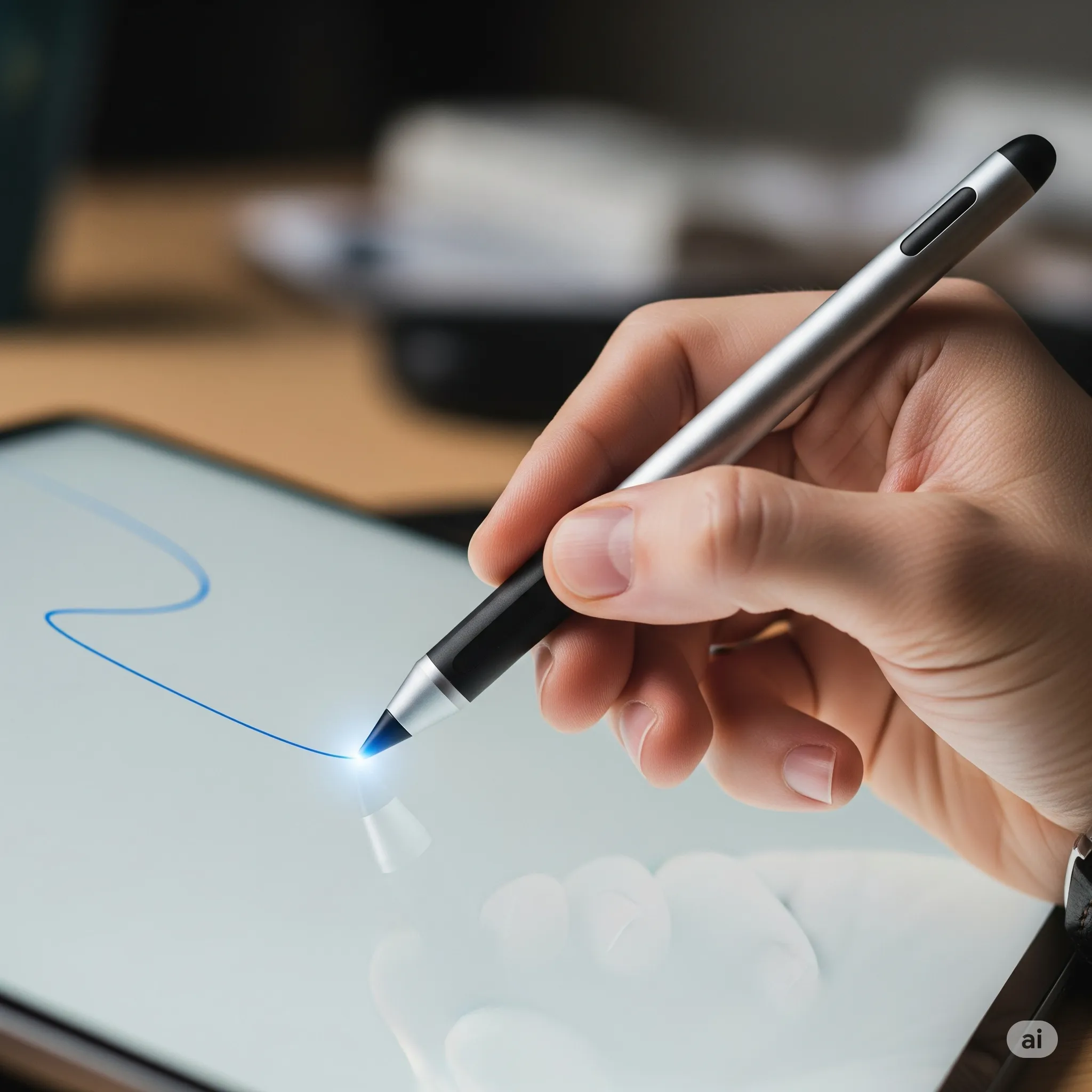
But what happens when we engage mindfulness through the concentrated gates of sight and touch simultaneously? What texture of experience emerges when we ground our attention not in the ephemeral breath, but in the concrete interplay of stylus meeting screen, line emerging into being?
For the seasoned practitioner, tracing meditation offers more than just another technique—it provides a laboratory for investigating the embodied mind in real time, and a remarkably stable anchor for those days when even the breath feels too subtle to hold a restless mind.
A Focus on Touch and Sight
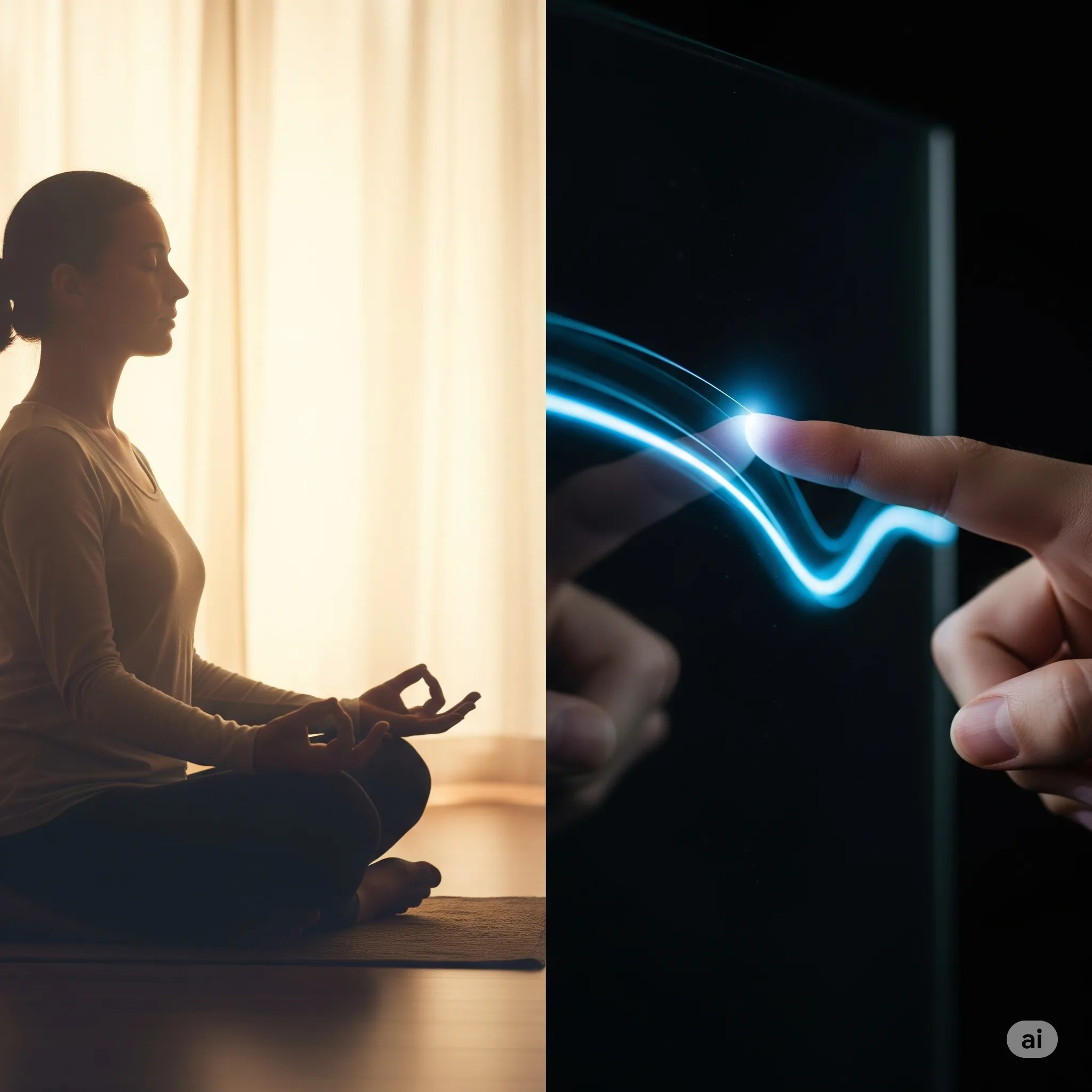
Traditional mindfulness anchors tend toward the subtle. The breath, while always available, requires a certain refinement of attention to perceive clearly. Body sensations arise and pass away quickly, demanding sustained focus to track their impermanent dance. Sound, too, emerges and dissolves in ways that can feel elusive when the mind is particularly scattered.
Tracing meditation operates through a different mechanism entirely. Here, awareness concentrates intensely on the physical sensation of stylus against screen—or finger against glass—while simultaneously tracking the visual feedback of the line as it appears. This dual-sensory engagement creates what might be described as a "thick" anchor, dense with sensory information and remarkably difficult for attention to slip away from unnoticed.
The texture of this experience differs markedly from breath-based practice. Where following the breath can feel like tracking something gossamer-light, tracing engages awareness through what we might call "high-definition" sensory input. The pressure of stylus on screen, the slight drag of friction, the visual completion of each curve and angle—these provide a richness of immediate sensory data that can hold attention with surprising tenacity.
This isn't to suggest that one approach is superior to another, but rather that different sensory gates offer different qualities of investigation. Just as a microscope and telescope serve different purposes for a scientist, breath awareness and tracing meditation reveal different aspects of how attention, intention, and awareness operate.
The Embodied Mind in Action
Recent developments in neuroscience and psychology have begun to seriously challenge the Cartesian split between mind and body that has dominated Western thought for centuries. The emerging understanding of the "embodied mind" suggests that cognition isn't something that happens to the body, but rather through and with it. This isn't merely philosophical speculation—it's the foundation for therapeutic modalities like somatic therapy and EMDR (Eye Movement Desensitization and Reprocessing) that work directly through the body to address mental and emotional patterns.
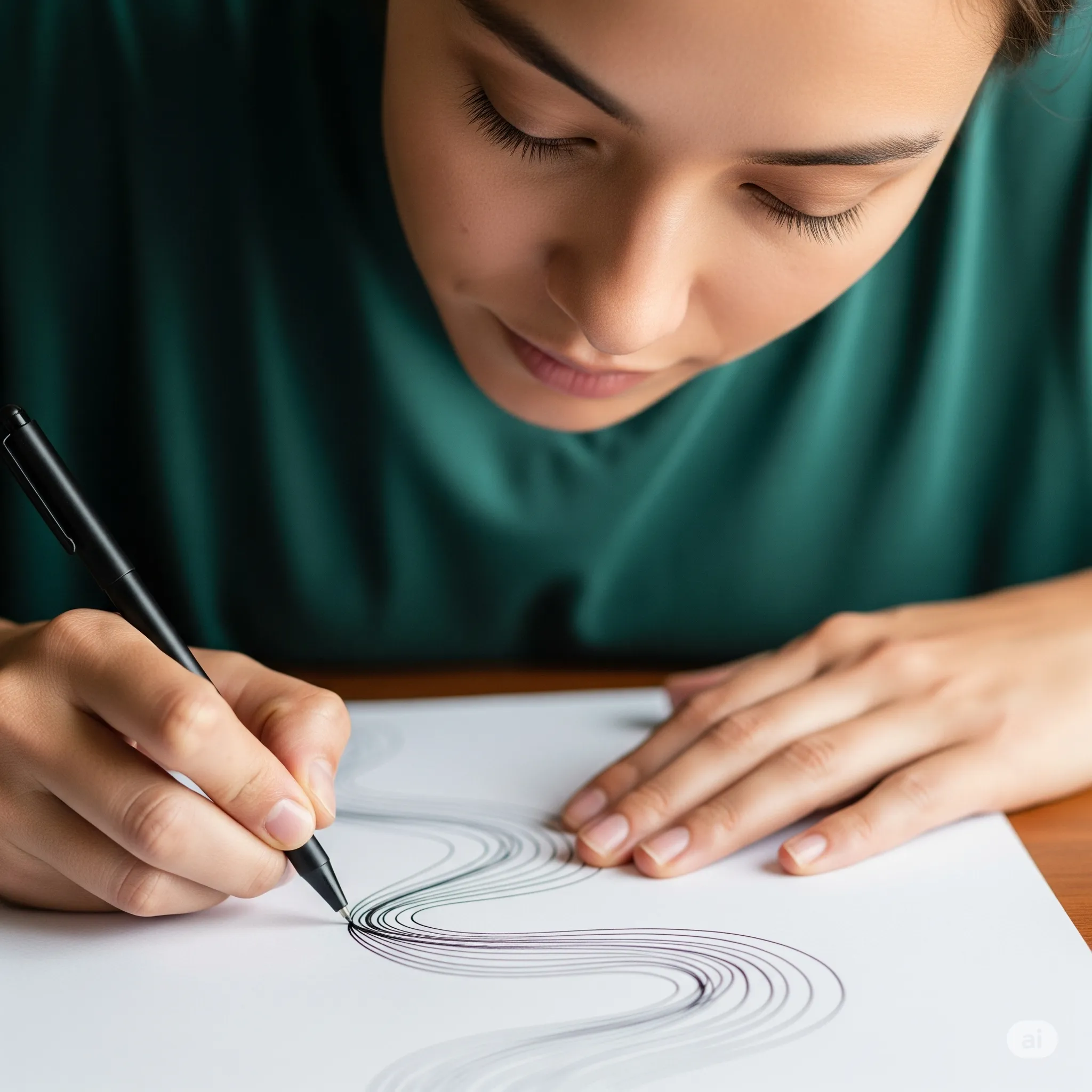
Tracing meditation offers a direct, real-time exploration of this mind-body integration. Unlike seated meditation, where the relationship between physical stillness and mental awareness can sometimes feel abstract, tracing creates an immediate feedback loop between intention, physical action, and conscious awareness. The mind intends to trace a particular curve; the hand responds; the eye confirms; attention either stays present with this unfolding process or wanders into conceptual territory—and when it wanders, the hand usually follows, creating visible evidence of that distraction in the form of a wayward line.
This creates what might be considered a meditation with built-in biofeedback. The quality of the line becomes a direct reflection of the quality of attention. A smooth, confident line suggests present-moment awareness; a shaky or hesitant line might indicate distraction or mental commentary ("Am I doing this right? This doesn't look very good..."). Unlike traditional meditation, where the meditator might not notice distraction until several minutes into a mental storyline, tracing offers immediate tactile and visual feedback about the state of awareness.
For experienced practitioners familiar with investigating the constructed nature of the self, tracing meditation provides a particularly clear window into the moment-by-moment arising of the sense of agency. Who or what is guiding the stylus? When attention is fully absorbed in the process, the sense of a separate "doer" often dissolves, leaving just tracing happening. When the mind becomes self-conscious or judgmental, suddenly there's a very solid sense of someone doing the tracing—and usually doing it wrong.
A Concrete Anchor for a Restless Mind
Even seasoned meditators know that some days are simply more challenging than others. Stress, lack of sleep, emotional upheaval, or even just the natural rhythms of mental energy can create conditions where the mind feels particularly unruly. On such days, returning to the breath might feel like trying to calm a hurricane with a whisper.
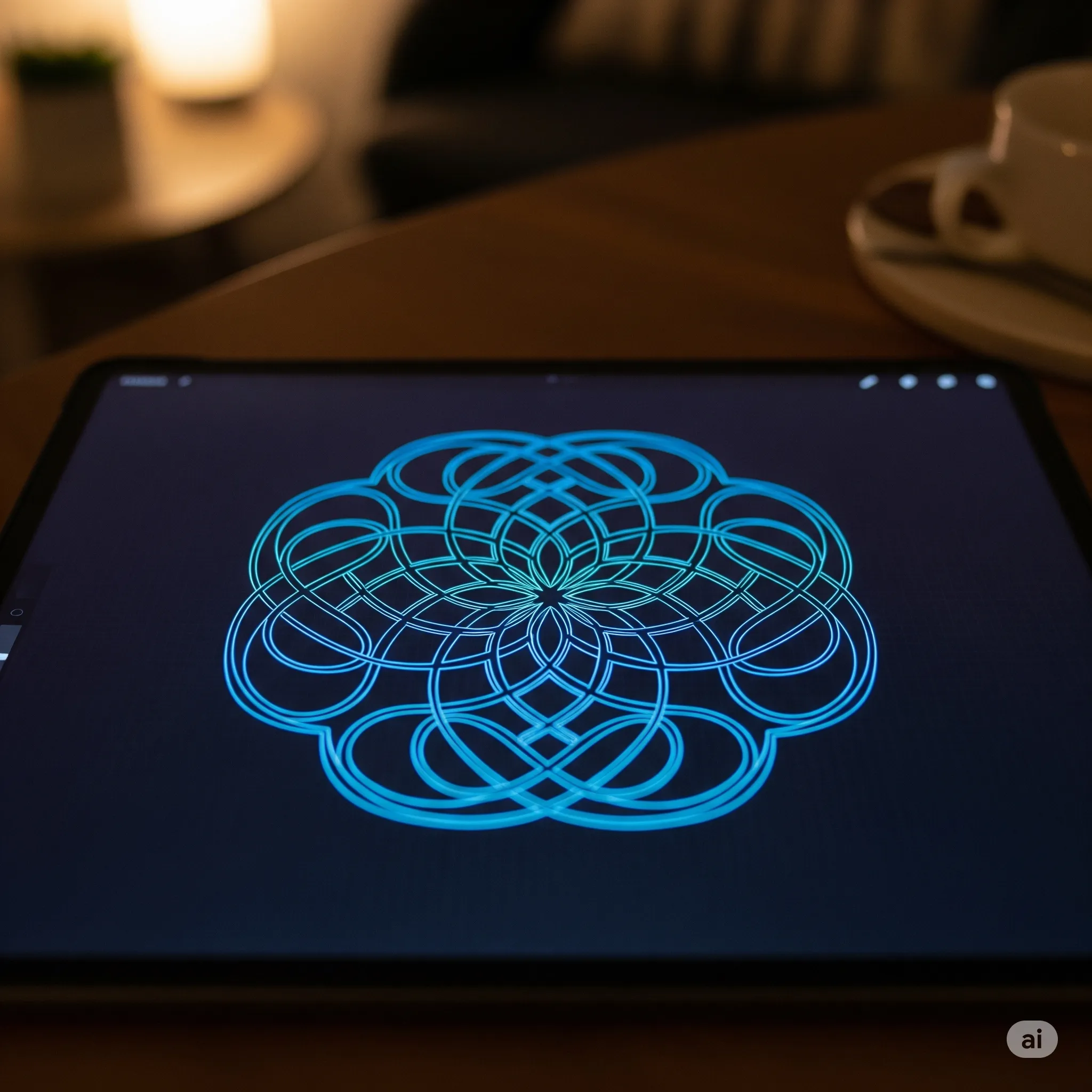
The concrete, multisensory nature of tracing meditation can provide stability when more subtle anchors prove insufficient. The visual component alone—watching a line emerge in real time—can be deeply absorbing in a way that's difficult for the discursive mind to co-opt. Unlike following the breath, where it's possible to maintain technical attention while running elaborate internal commentaries, tracing demands a quality of presence that tends to crowd out mental chatter simply through sensory saturation.
This isn't about suppressing thought or forcing the mind into submission. Rather, it's about providing such rich, immediate sensory engagement that conceptual proliferation simply has less space in which to operate. In traditional meditation terms, this might be understood as developing samatha (calm abiding) through highly focused, one-pointed attention—what the classical texts describe as vitakka and vicara, initial and sustained application of mind to its chosen object.
For practitioners working with particularly strong patterns of anxiety, depression, or trauma, the embodied nature of tracing meditation can offer a gentler entry point than traditional sitting practice. The dual engagement with touch and sight provides what trauma-informed meditation teachers call "dual awareness"—the ability to be present with internal experience while simultaneously maintaining connection to immediate sensory reality. This can be especially valuable for those whose meditation practice sometimes leads them into difficult psychological terrain.
Conclusion
The deeper we go into contemplative practice, the more we recognize that different situations call for different tools. Tracing meditation isn't intended to replace your established practice any more than a surgeon would abandon the scalpel in favor of the laser—both have their place in the operating room of consciousness.
What tracing offers is a powerful method for investigating the mind-body connection from a fresh angle, one that reveals aspects of attention and awareness that might remain hidden in more traditional approaches. It provides a concrete anchor for days when the mind is especially restless, and a laboratory for exploring the embodied nature of consciousness in real time.
Most fundamentally, tracing meditation serves as a reminder that awakening isn't confined to the cushion, the breath, or any particular posture or technique. Mindfulness can arise through any sensory door, in any moment, through any activity undertaken with full presence and awareness. Sometimes the deepest insights come not from sitting still, but from the simple act of mindfully tracing a line across a screen, watching with fresh eyes as intention becomes action, as attention shapes experience, and as the mystery of consciousness unfolds through the humble meeting of stylus and glass.
For the practitioner interested in exploring this territory, the invitation is simple: approach tracing meditation with the same investigative spirit you bring to more traditional practice. What do you notice? How does awareness move differently when anchored through sight and touch? What patterns of mind become visible through this particular lens?
The path of awakening has always been about learning to see clearly. Sometimes, a new way of looking can illuminate aspects of reality that have been hiding in plain sight all along.