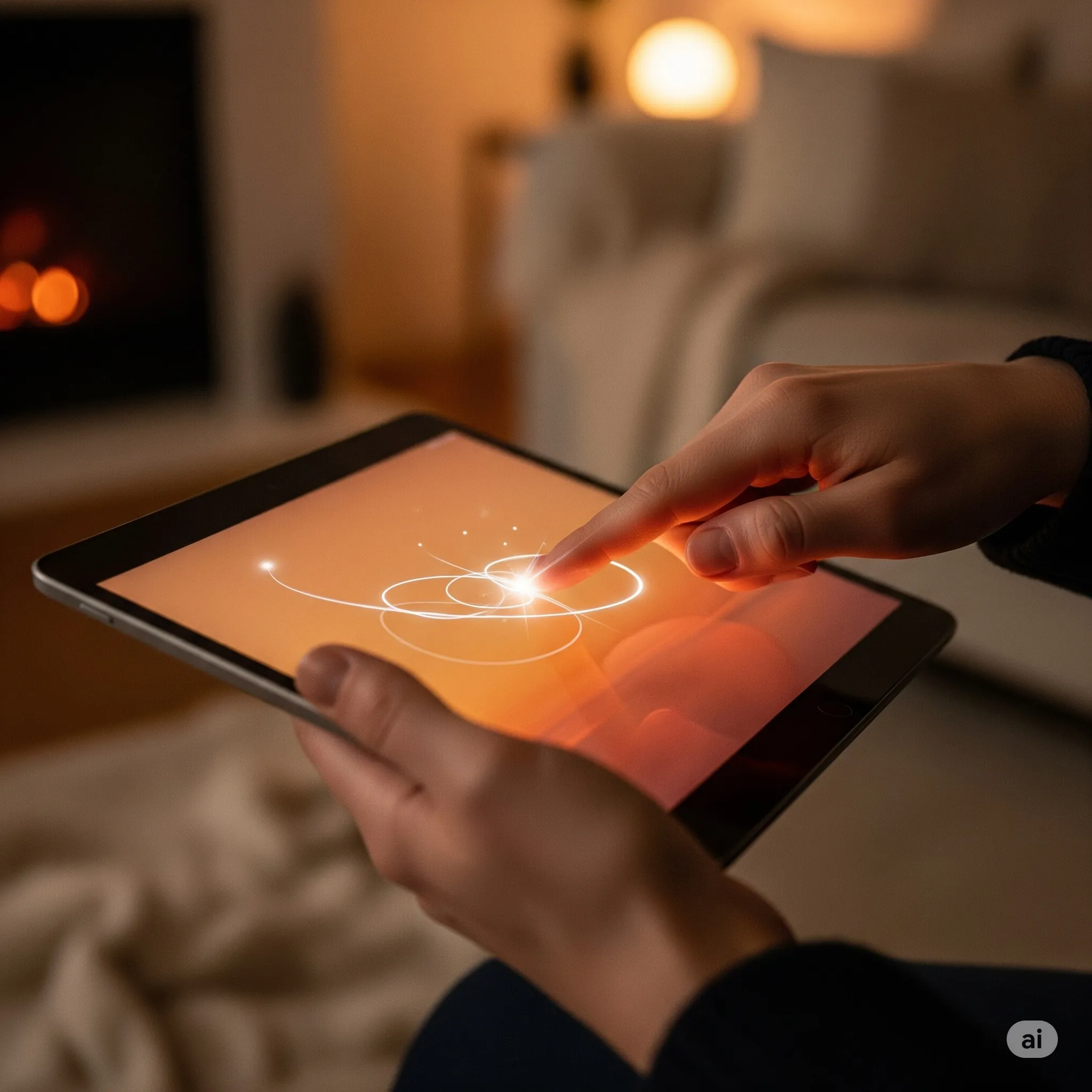
We all know that mindful movement is powerful. Yoga studios dot every corner, martial arts schools teach ancient traditions of moving meditation, and walking labyrinths offer contemplative journeys in parks and spiritual centers worldwide. The research is clear: these practices reduce stress, lower cortisol, and improve both mental and physical wellbeing. They've been helping people find balance for thousands of years, and their popularity in our stress-filled world continues to grow.
But here's the question that doesn't get asked often enough: What about those who can't access these practices?
What if you live in a 300-square-foot studio apartment where there's barely room to roll out a yoga mat? What if you're recovering from an injury, dealing with chronic pain, or simply don't have the physical mobility that traditional mindful movement requires? What if you're stuck in a middle seat on a cross-country flight and desperately need to center yourself before that important meeting?
The truth is, while yoga and other traditional forms of mindful movement offer incredible benefits, they're not accessible to everyone. And everyone deserves the opportunity to experience the profound calm that comes from mindful movement.
The Space Constraint: When There's Simply No Room
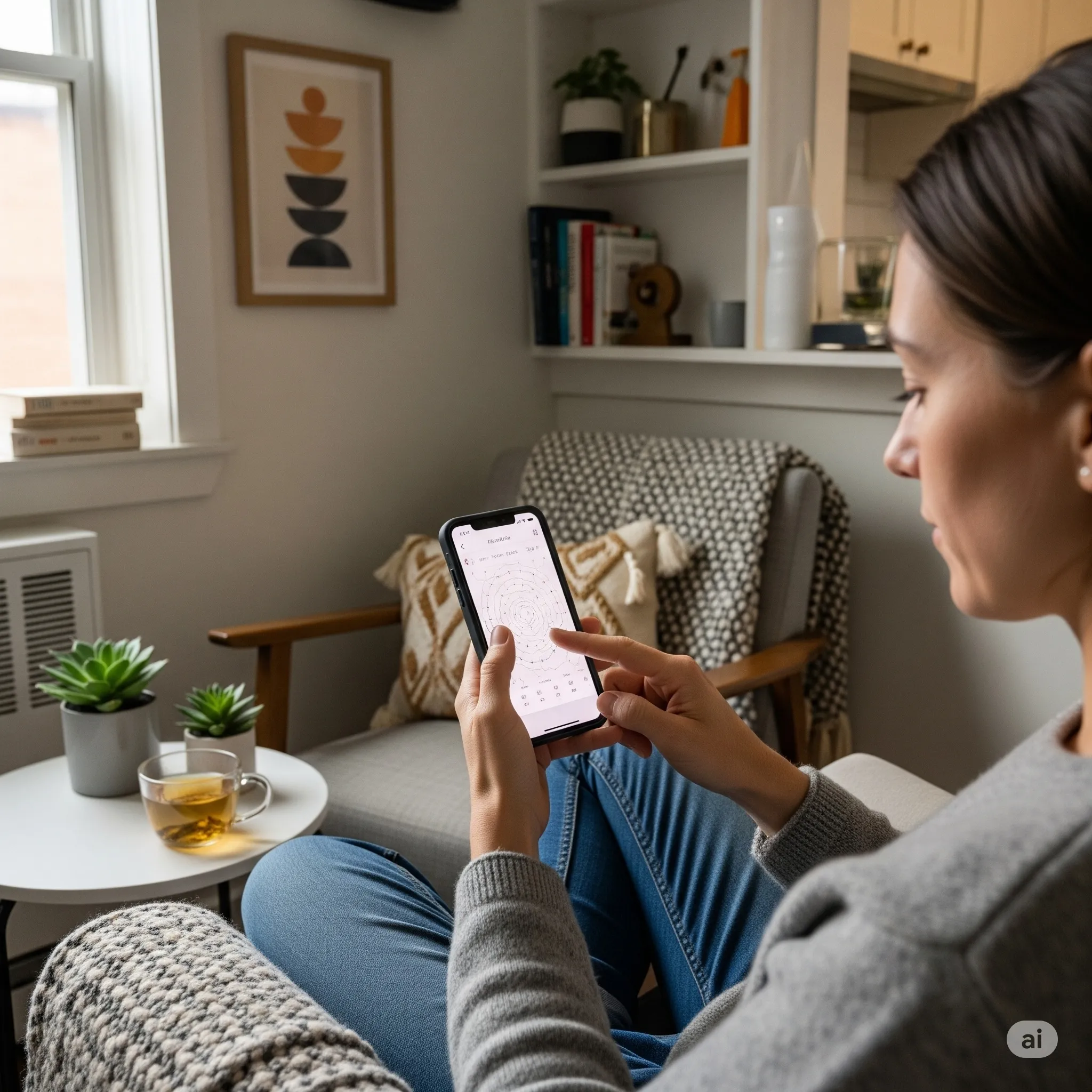
Many apartment dwellers find it somewhat difficult to meditate in their unit because of various distractions, loud noises, and lack of space. If you've ever tried to do a sun salutation in a tiny studio apartment, you know the struggle. Your warrior pose becomes a game of "don't knock over the coffee table," and your child's pose turns into an intimate encounter with dust bunnies under the couch.
Traditional yoga requires a surprising amount of space. Even basic sequences need room to extend your arms fully in all directions, space to step back into a lunge, and enough floor area to lie down comfortably. Walking meditations need, well, room to walk. And labyrinth walking? Forget about it unless you happen to live near one of the few remaining public labyrinths.
This space barrier is real and significant. Meditation corners can be used for journaling, silence, breathing, reciting affirmations, stretching, reading, and more, but even creating a small meditation corner requires dedicated space that many simply don't have.
Contrast this with tracing meditation. All you need is enough space to rest your phone or tablet in front of you—the same amount of space you'd need to read a book or check your email. On an airplane? No problem. In a cramped dorm room? Perfect. In a hospital bed? Absolutely doable.
The Physical Constraint: When Your Body Has Different Needs
Perhaps even more significant than space constraints are the physical barriers that traditional mindful movement can present. Limited mobility can result from a variety of conditions, including but not limited to arthritis, paralysis, muscular dystrophy, multiple sclerosis, and injury recovery.
If you're in a cast, dealing with chronic pain, recovering from surgery, or managing a disability, the physical demands of yoga can feel overwhelming rather than healing. Even "gentle" yoga typically requires getting up and down from the floor, balancing on one foot, or holding positions that might be uncomfortable or impossible for someone with physical limitations.
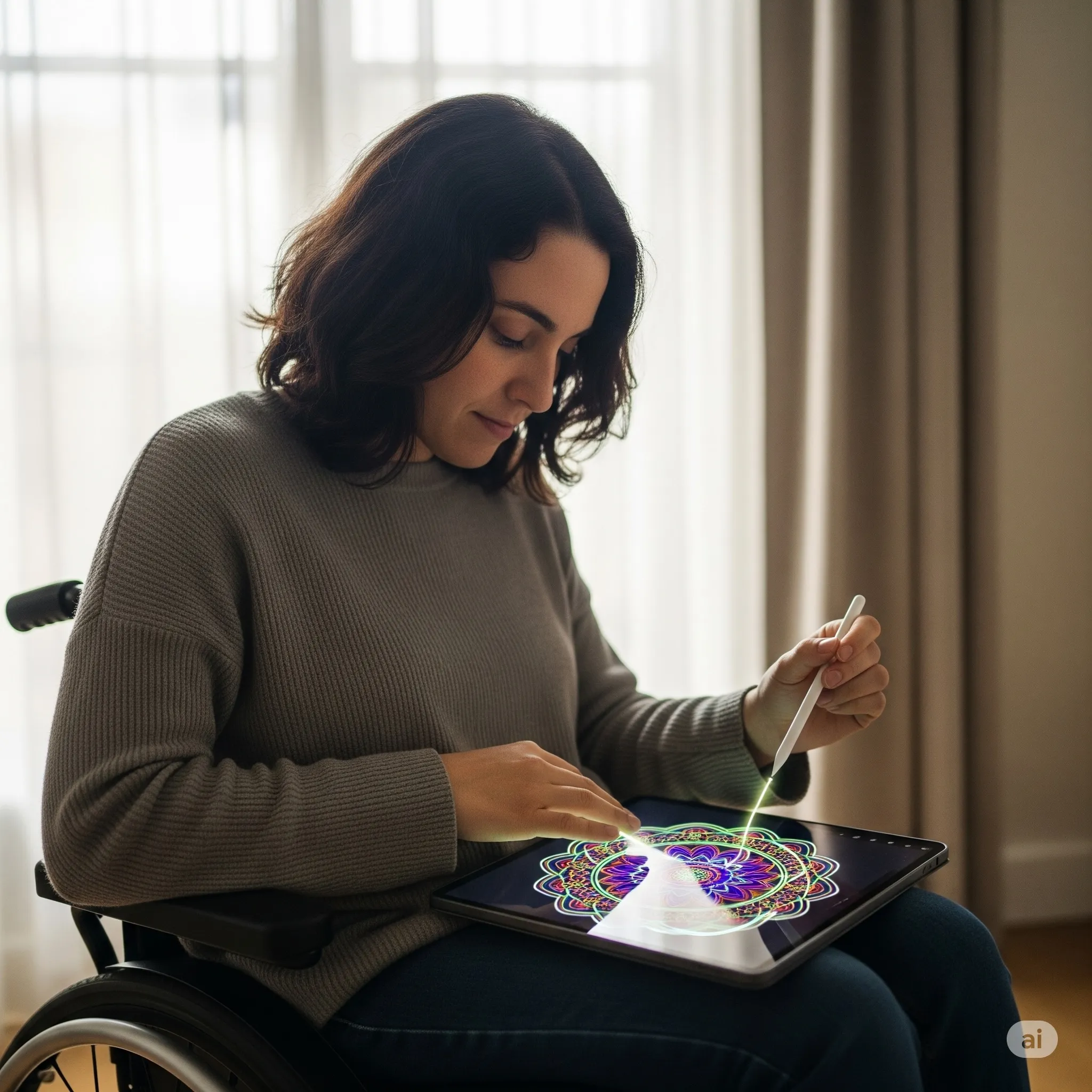
Tracing meditation transforms this equation entirely. You can trace with your non-dominant hand if your dominant hand is injured. You can trace sitting in a wheelchair, lying in bed, or in whatever position is most comfortable for your body. There's no need to get on the floor, balance, or hold any particular pose. The only movement required is the gentle motion of your finger or stylus across a screen—a movement so minimal that it's accessible to almost everyone.
Matthew Sanford, founder of Mind Body Solutions, told Healthline that no physical or neurological limitation has ever stopped him from teaching yoga to someone. He has taught yoga to individuals without limitations, those in wheelchairs, and even people in comas. This inspiring example shows that yoga can indeed be adapted—but it often requires specialized instruction and significant modifications. Tracing meditation, on the other hand, requires no such adaptations. It's accessible in its original form.
The Same Core Principle: Movement as a Gateway to Stillness
Here's what's remarkable: despite these practical differences, tracing meditation achieves the same fundamental goal as traditional mindful movement practices. Whether you're flowing through a yoga sequence, practicing tai chi, or walking a labyrinth, the underlying principle is identical—using focus on the body and its movements to help dismiss the fleeting distractions of what Buddhist tradition calls the "monkey mind."
In yoga, you might focus on the sensation of your feet pressing into the ground during mountain pose, or the feeling of your spine lengthening as you reach your arms overhead. In martial arts, you concentrate on the precise movement of your hand through space. In labyrinth walking, you attend to each step and the rhythm of your gait.
Tracing meditation simply miniaturizes this movement to the hand. Instead of your whole body moving through space, your finger moves across a screen, following the lines of an image that speaks to you. The focus is the same: the present-moment awareness of movement, the concrete sensation of your body engaging with physical space. The tip of your pen or finger becomes as real and immediate an anchor as your breath or the ground beneath your feet.
This focused attention on small, controlled movements has the same neurological effects as larger mindful movements. Your internal monologue quiets. Your nervous system calms. Your mind finds the same state of "effortless one-pointed attention" that many mindfulness traditions emphasize—but without the barriers that keep so many people from accessing traditional practices.
As one researcher noted about calligraphy (a close cousin to tracing meditation), the practice provides a concrete and easily identifiable object to observe, unlike (for example) your breath, or (as I tend to use) the sensation of being grounded. This concrete focus makes the practice immediately accessible, even to those who struggle with more abstract meditation instructions.
Making Mindful Movement Truly Universal
The beauty of tracing meditation lies not in replacing traditional mindful movement practices—yoga, martial arts, and walking meditations remain powerful tools for those who can access them. Rather, tracing meditation expands the definition of who gets to benefit from mindful movement.
Everyone deserves to experience the profound calm that comes from moving with intention and awareness. Everyone deserves a way to quiet their monkey mind, reduce their stress, and find present-moment awareness. Traditional practices have been gatekeepers to these benefits, unintentionally excluding those without the space, mobility, or physical capability to participate.
Tracing meditation changes that. Whether you're a busy executive trying to find calm between meetings, a new parent with no time or space for a full yoga practice, someone recovering from an injury, or simply someone who's never felt at home in a yoga studio, tracing meditation offers a pathway to the same benefits that humans have been seeking through mindful movement for millennia.
The goal isn't to replace your yoga practice if it works for you—it's to ensure that mindful movement is available to everyone, regardless of their circumstances. In a world where stress and anxiety touch every life, shouldn't the tools for finding peace be just as universal?
Ready to experience mindful movement that fits your life exactly as it is? Try tracing meditation today with Ibiss. All you need is five minutes and a device you probably already carry with you everywhere you go.