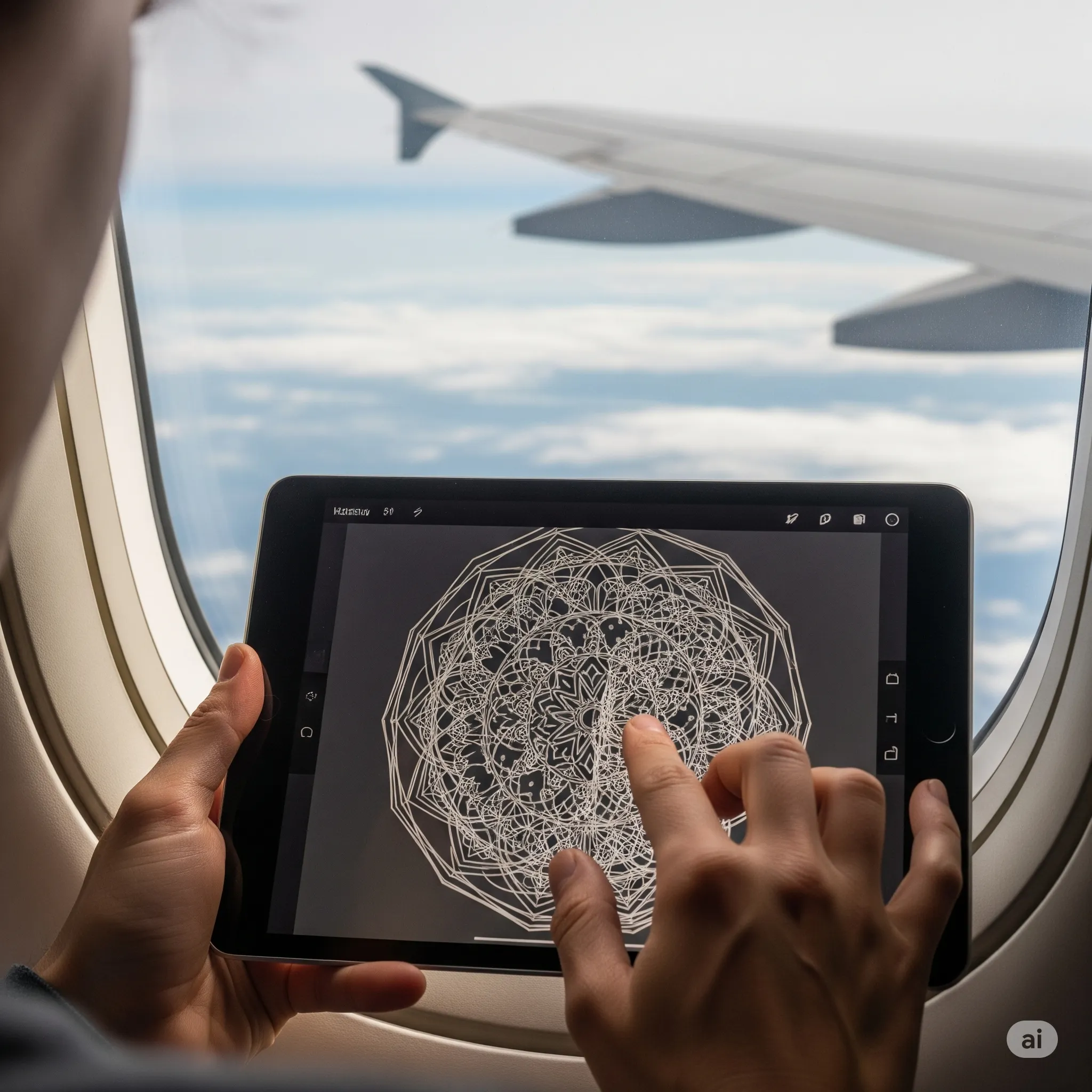
Your meditation cushion is calling, but you're stuck in seat 14B at 30,000 feet. Your usual walking meditation route beckons, but you've got back-to-back Zoom calls until 6 PM. Sound familiar? If you're one of those practitioners who's discovered the life-changing benefits of mindfulness but struggles to maintain your practice during travel or hectic workdays, you're not alone. The modern world wasn't exactly designed with meditation breaks in mind.
Enter tracing meditation: the mindfulness practice that travels as light as your laptop and requires nothing more than a phone or tablet. While traditional meditation practices ask you to find the perfect quiet space and uninterrupted time, tracing meditation meets you where you are—literally anywhere.
The Portability Advantage: Meditation That Fits in Your Pocket
Let's be honest about the logistics. Seated meditation requires a reasonably quiet space where you won't be interrupted. Walking meditation needs, well, space to walk—and preferably somewhere you won't look odd pacing back and forth. Yoga demands even more room, plus the flexibility to move through poses without bumping into fellow passengers or colleagues.
Tracing meditation? All you need is a device with a touchscreen and the Ibiss app. No special seating position, no concerned looks from strangers, no hunting for that elusive quiet corner. You can practice tracing meditation:
- On an airplane during that endless middle seat experience
- At your desk between back-to-back meetings
- In a waiting room before an important appointment
- During your lunch break at a busy café
- In your hotel room after a long day of conferences
The beauty lies in its invisibility. To anyone watching, you're simply using your tablet or phone—nothing unusual about that. Meanwhile, you're actively engaged in a powerful mindfulness practice that's helping you reset and recenter.

A Reset Between Stressful Tasks: The Mental Palate Cleanser
Think of tracing meditation as a palate cleanser for your mind. Just as a sorbet clears your taste buds between courses, a brief tracing session can clear your mental space between challenging tasks.
That difficult client call at 2 PM? Follow it with a three-minute tracing meditation before diving into your next project. About to walk into a tense negotiation? Spend two minutes tracing a calming mandala to set your intention and ground yourself in the present moment. Feeling overwhelmed by your inbox? A five-minute tracing break can help you approach those emails with fresh perspective rather than mounting anxiety.
Unlike longer meditation sessions that might leave you feeling too relaxed for the demands ahead, these brief tracing meditations provide just enough mindful reset to help you transition cleanly from one mental state to another. You're not checking out of your day—you're checking in with yourself so you can engage more skillfully with whatever comes next.
The research backs this up. Studies on brief mindfulness interventions show that even short sessions can measurably reduce stress hormones and improve emotional regulation. When you're tracing an image, focusing on the movement of your finger across the screen and the lines appearing beneath it, you're giving your nervous system permission to shift gears from reactive mode to responsive mode.
Active Engagement for a Work-Weary Mind
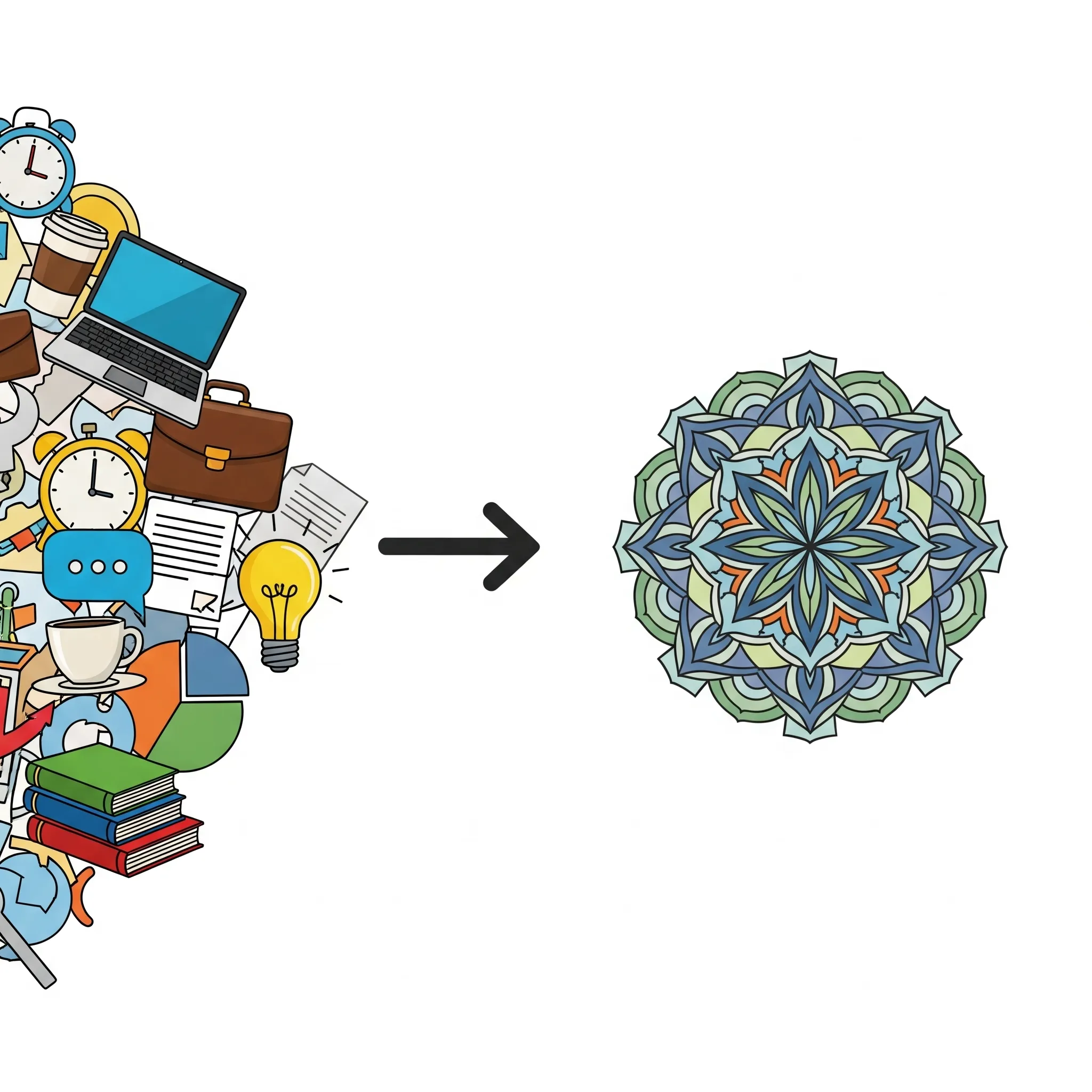
After eight hours of spreadsheets, strategy sessions, and decision-making, your brain might feel like it's been running a marathon. This is precisely when traditional meditation can feel impossible. Sitting quietly with your thoughts when those thoughts are a swirling mix of work concerns, tomorrow's to-do list, and general mental fatigue? Not exactly appealing.
This is where the active nature of tracing meditation becomes invaluable. Instead of asking your overstimulated mind to suddenly become still and quiet, tracing gives it something specific and manageable to focus on. The movement of your hand, the emergence of the image, the gentle rhythm of following the lines—these provide what meditation teachers call a "concentration object" that's concrete and immediately accessible.
Your monkey mind, that chattering internal commentary that Buddhist practitioners know so well, finds it much harder to dominate when your attention has a clear, engaging focus. As you trace the curves of a nature scene or follow the geometric patterns of a mandala, those six and a half thoughts per minute that normally compete for your attention naturally begin to quiet.
Think of it this way: after a day of complex cognitive work, your mind is like a browser with thirty tabs open. Tracing meditation doesn't demand that you close all those tabs at once—it simply opens a new, calming tab and gently draws your attention there. The other tabs are still there, but they're no longer competing for center stage.
For many practitioners, this makes tracing meditation the perfect bridge between the high-activation state needed for work and the restorative state that supports genuine rest and recovery. It's active enough to engage a busy mind, but meditative enough to begin the process of genuine relaxation.
Your Practice, Anywhere You Are
Traditional meditation practices are irreplaceable for deep spiritual development and sustained well-being. But life happens in the spaces between formal practice sessions—in airports, offices, waiting rooms, and all those moments when you need mindfulness most but traditional meditation feels impossible.
Tracing meditation isn't meant to replace your seated practice or your morning yoga routine. Instead, it's designed to complement them, ensuring that the benefits of mindfulness can travel with you wherever your life takes you. Whether you're a seasoned meditator looking for a portable practice or someone who's struggled with traditional meditation forms, tracing offers a practical, accessible way to maintain your connection to mindful presence throughout even the busiest days.
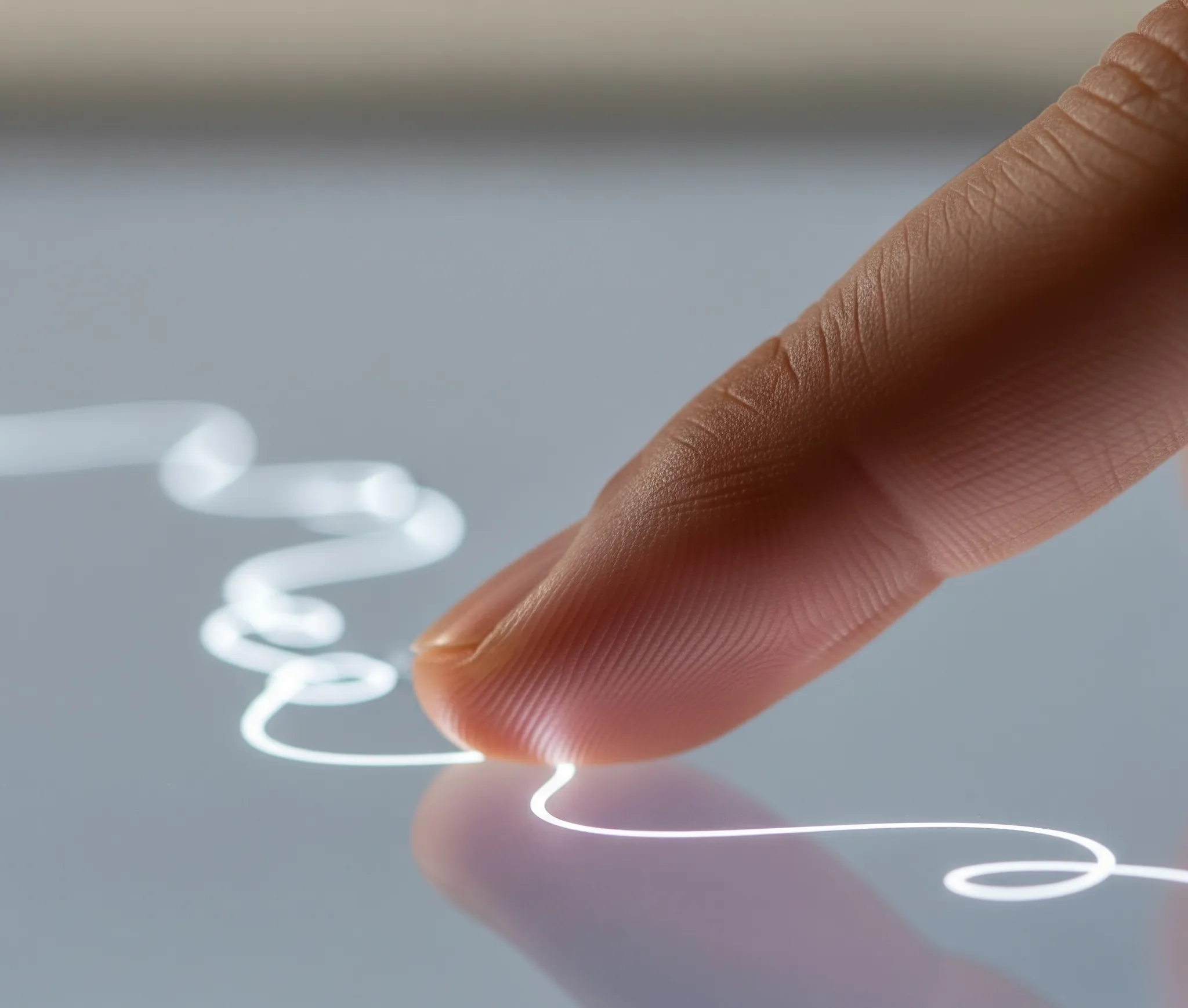
The next time you find yourself caught between the need for a mindful moment and the constraints of your schedule, remember: your practice doesn't have to wait until you get home. Sometimes the most profound meditation happens in the most ordinary places, guided by nothing more than your finger, a screen, and your willingness to be present with whatever lines appear beneath your touch.