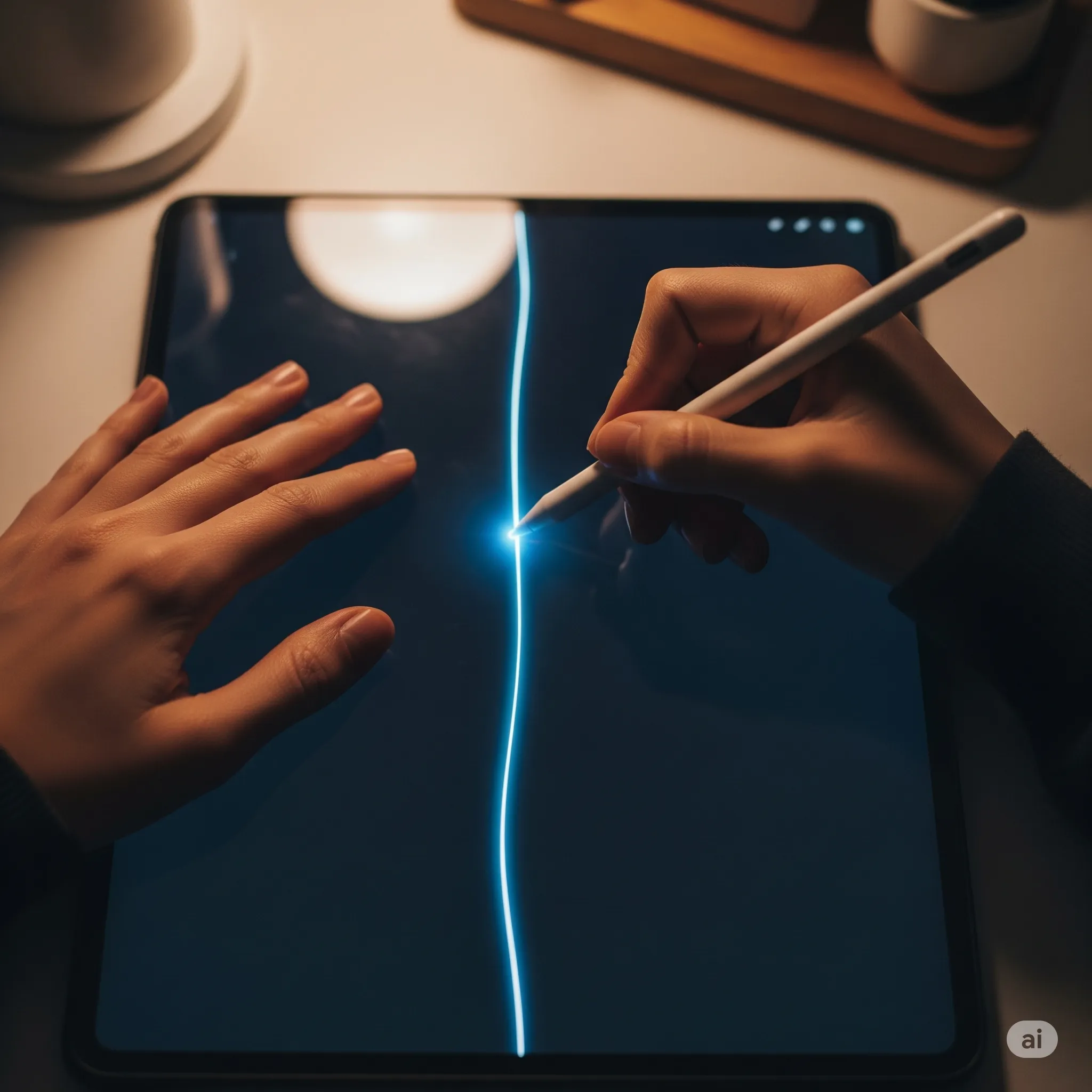
You sit down to create something—anything—and suddenly that familiar voice pipes up: "This isn't good enough." "You're not a real artist." "Who are you kidding?" Sound familiar? You're not alone. That voice is what Julia Cameron calls the "inner critic" in The Artist's Way, and what Steven Pressfield terms "Resistance" in The War of Art—the universal force that seems designed to stop us from doing our most meaningful creative work.
Here's the thing about creative blocks: they're rarely about lacking ideas or skill. They're about getting trapped in a cycle of self-judgment before we've even begun. Pressfield identifies this as "fear, self-doubt, procrastination, perfectionism, all the forms of self-sabotage that stop us from doing our work and realizing our dreams." But what if there was a way to bypass that critic entirely and reconnect with the simple joy of making something?
When your hands know more than your head
Think back to childhood for a moment. Remember tracing your hand on paper, or carefully following the dotted lines of a coloring book? There was no voice telling you it wasn't good enough—there was just the satisfying feeling of your pencil moving across the paper, the gentle focus required to stay on the line, the quiet pride in completing the task. That focused, non-judgmental state is exactly what we're after when creative blocks have us stuck.
Tracing meditation recaptures that childlike focus, offering a way to create without the pressure of originality or perfection. When you're following a pre-existing image, your inner critic has much less ammunition. You're not trying to invent something from nothing—you're simply following where the line leads, moment by moment.
The resistance fighter's secret weapon
Steven Pressfield would tell you that Resistance is strongest when we're doing work that matters most to us. It shows up as procrastination, perfectionism, and that nagging voice that says we're not ready, not good enough, not a "real" creative person. Resistance "acts against human creativity" in all its forms, making it feel impossible to even start.
But here's where tracing meditation becomes a secret weapon: it's so simple that Resistance barely notices it. You're not sitting down to write the great American novel or paint a masterpiece—you're just tracing a line. And yet, in that simple act, you're doing several powerful things:
- Building creative momentum without the pressure of having to be "good"
- Training your attention to focus on process rather than outcome
- Reconnecting with the physical joy of making marks on paper (or screen)
- Proving to yourself that you can complete creative acts, even small ones
It's like sneaking past the guard at the gate of creativity. By the time Resistance realizes what you're doing, you're already back in the creative flow.
Morning pages meet mindful movement
If you're familiar with The Artist's Way, you know about morning pages—three full pages written every morning right after waking up that help clear mental clutter and connect with your creative self. Tracing meditation works similarly, but engages your body as well as your mind.
Like morning pages, tracing meditation helps you:
- Quiet the mental chatter that often precedes creative blocks
- Establish a regular creative practice that builds momentum over time
- Access a state of flow where self-consciousness fades into the background
But unlike morning pages, tracing meditation is inherently embodied. The movement of your hand, the sensations of stylus or finger on screen, the visual feedback of lines appearing—all of this engages multiple senses and can be particularly effective for people who find purely mental practices challenging.
The perfectionist's paradox
Here's something every perfectionist needs to hear: the goal of tracing meditation is not to trace perfectly. In fact, making "mistakes"—going outside the lines, adding extra marks, interpreting curves differently—is part of the point. When you approach tracing with curiosity rather than judgment, those "imperfections" become interesting variations rather than failures.
This is crucial for overcoming creative blocks because perfectionism is often at their root. We get so focused on creating something worthy that we forget the fundamental truth: all creativity begins with play. Tracing meditation returns you to that playful state where exploration matters more than execution.
A practice for the practically creative
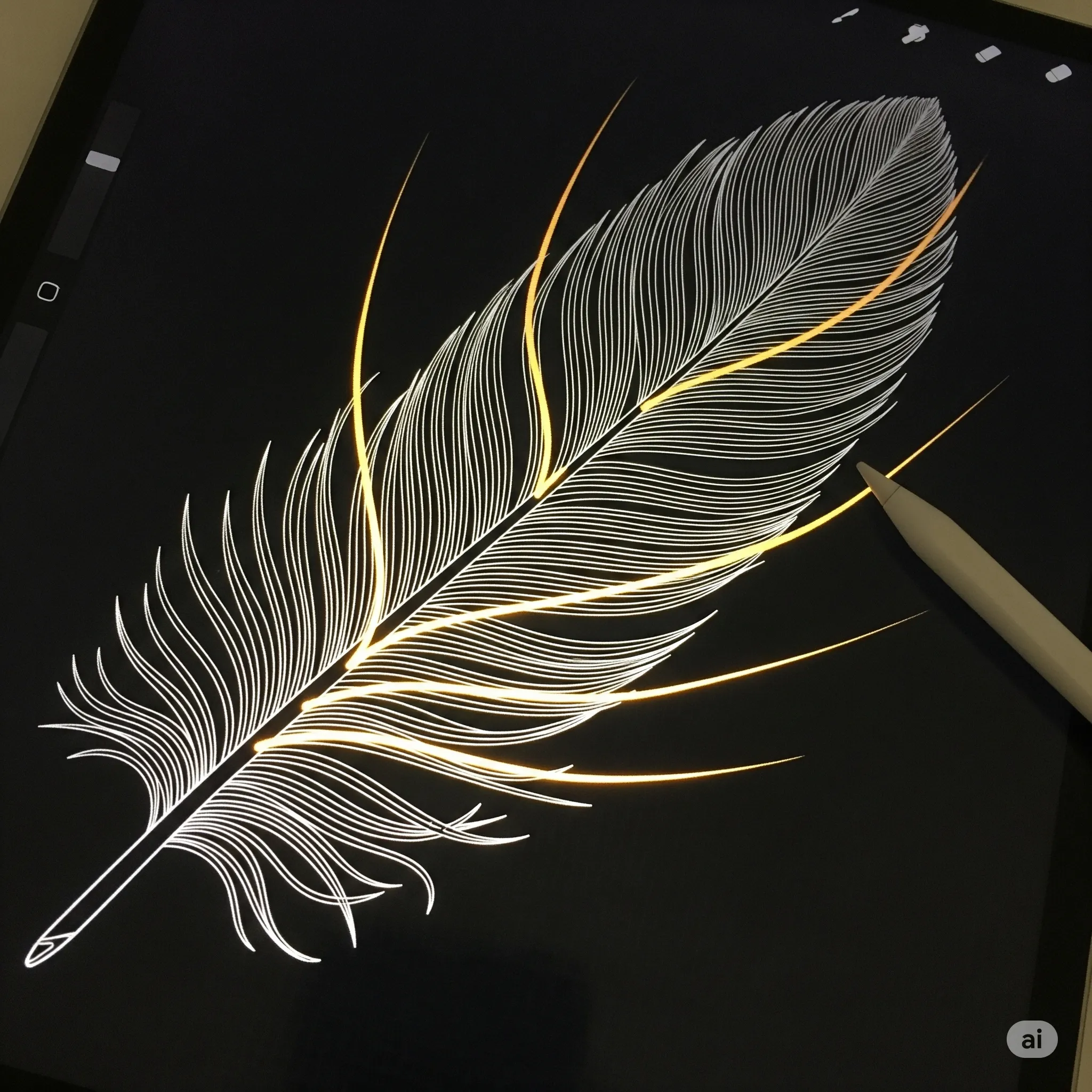
Unlike many creative practices, tracing meditation requires no special talent, extensive time commitment, or expensive materials. You can trace on a phone during a lunch break, on a tablet while waiting for a meeting to start, or with pen and paper while your coffee cools. It's creativity for the real world—the world where most of us have limited time, space, and energy for elaborate artistic rituals.
This accessibility is intentional. Both Cameron and Pressfield emphasize that creative practice should be sustainable and consistent rather than dramatic and sporadic. Cameron notes that "we are led into expansion—we are trained by the pages" to take ourselves and our creative impulses seriously through regular practice.
A five-minute tracing meditation can serve as a bridge back to your larger creative work. Think of it as a creative warm-up that reminds your nervous system what it feels like to make something without judgment. Often, that's all you need to dissolve the block and get back to your "real" creative work.
Getting started: your first creative tracing meditation
Ready to try it? Here's how to approach tracing meditation specifically for creative blocks:
- Choose your tool and image. If you're using Ibiss, select an image that feels calming or inspiring—nature scenes, mandalas, or geometric patterns work particularly well. If you're using paper, find a line drawing that appeals to you.
- Set a gentle intention. Before you begin, take a breath and set an intention not to create something perfect, but simply to reconnect with the joy of making marks. You might even think: "I'm not trying to be an artist right now, I'm just tracing lines."
- Focus on the physical sensation. As you trace, pay attention to the feeling of your finger or stylus moving across the surface. Notice the rhythm of curves and straight lines. If your inner critic starts up, gently return your attention to the physical act of tracing.
- Embrace the "mistakes". When you inevitably go outside the lines or add unplanned marks, pause for a moment and appreciate these as part of your unique interpretation rather than errors to be corrected.
- Notice what happens next. After your tracing meditation, pay attention to how you feel. Often, the act of completing something creative—even something as simple as tracing—can shift your entire relationship to your larger creative projects.
The long game: building creative resilience
Regular tracing meditation practice doesn't just help you overcome individual creative blocks—it builds long-term resilience against them. Each time you complete a tracing meditation, you're proving to yourself that you can create without the inner critic's permission. You're building what Cameron might call "creative recovery" and what Pressfield would recognize as a victory over Resistance.
Over time, this practice can fundamentally shift your relationship with creativity from something that requires special conditions, inspiration, or validation to something that's as natural and accessible as breathing. And that shift—from creativity as luxury to creativity as birthright—is perhaps the most powerful antidote to creative blocks there is.

Your creative rebellion starts here
Every time you trace a line mindfully, you're staging a small rebellion against all the voices—internal and external—that say you're not creative enough, not ready enough, not good enough to make things. You're saying, quietly but firmly, that the act of creating matters more than the quality of what's created.
In a world that often treats creativity as the domain of a special few, tracing meditation insists on something more democratic: that the capacity to create with focus and joy belongs to everyone. Your inner critic might not believe this yet, but your hands know it's true. Trust them, follow the lines, and see where they lead.
Ready to quiet that inner critic and reconnect with your creative flow? Try a tracing meditation with Ibiss today. Sometimes the path back to creativity is as simple as following a line.