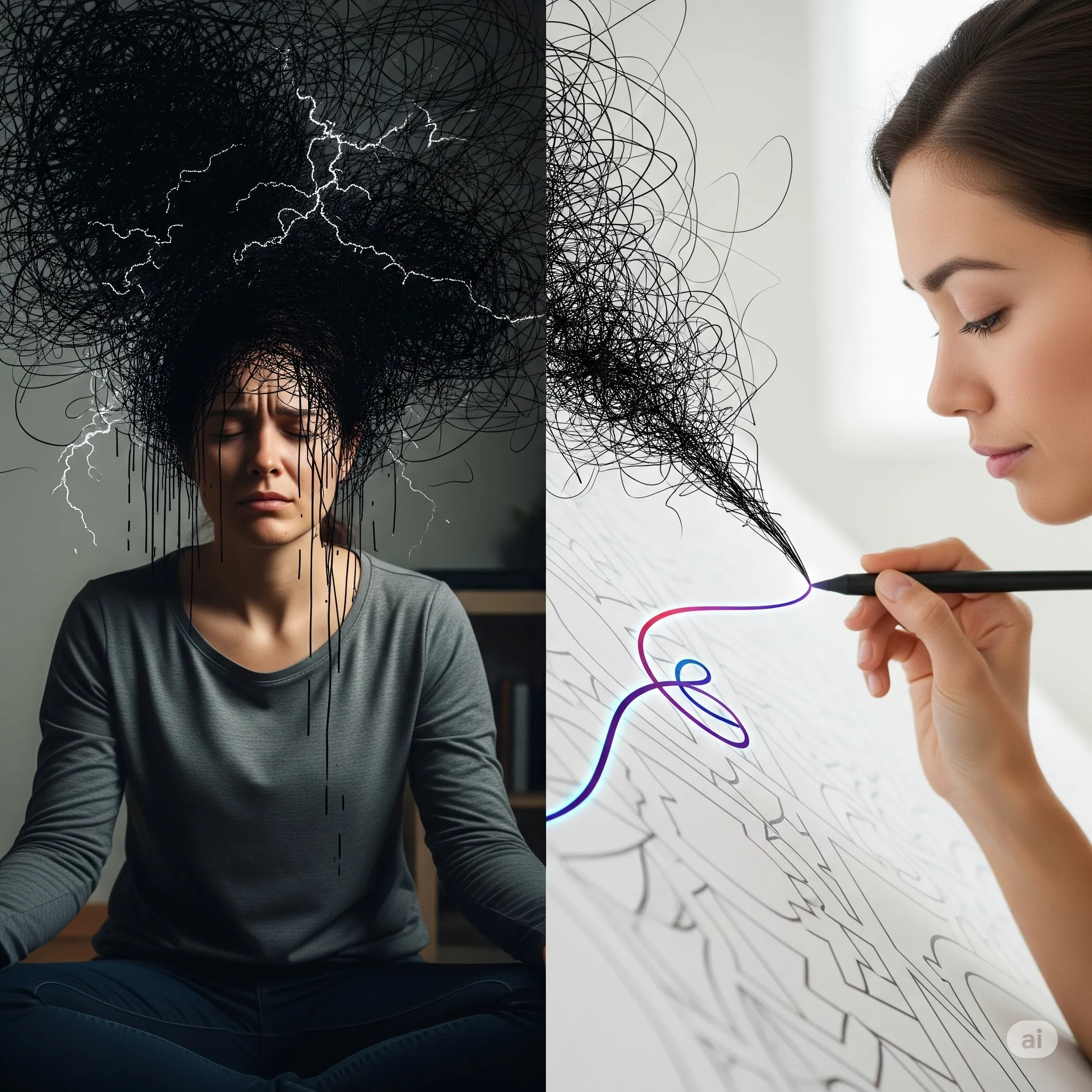
You sit down to meditate, hoping to find some peace in your busy day. Five minutes in, instead of feeling calmer, your heart is racing. Your mind isn't just wandering—it's sprinting through every worry, every unfinished task, every conversation that didn't go quite right. The voice in your head isn't getting quieter; it's getting louder, more insistent, more... well, anxious.
Sound familiar? If so, you're not broken, and you're definitely not alone. In fact, what you're experiencing is common. It's that moment when sitting still with your thoughts feels like the opposite of relaxation.
Why meditation can initially increase anxiety
When we're constantly busy, our minds develop sophisticated strategies for avoiding uncomfortable feelings. We check our phones, we multitask, we keep moving. Meditation, however, asks us to stop all of that and simply... be. For many people, this is the first time in ages they're truly alone with their thoughts, and it can feel overwhelming.
Practicing mindfulness is "a process of learning to trust and stay with feelings of discomfort rather than trying to escape from or analyze them," explains mindfulness researcher Bob Stahl. The key word here is "learning"—it's a skill that takes time to develop, and in the beginning, it can feel counterintuitive.
Think of it this way: imagine you've been living in a house where you always keep the music loud to drown out the sound of a leaky pipe. When you finally turn off the music, you don't suddenly have a quiet house—you have a house where you can finally hear that leak clearly. Your anxiety was always there; meditation is simply giving you space to notice it, perhaps for the first time.

What's actually happening in your mind
This initial spike in anxiety during meditation isn't a sign that meditation isn't working—it's often a sign that it is working. Research shows that mindfulness-based practices can effectively reduce anxiety symptoms and improve stress resilience, but these benefits typically develop over time, not in a single session.
During those first few meditation sessions, your brain is essentially learning a new skill. You're asking neural pathways that are used to constant stimulation and distraction to slow down and focus. It's like asking someone who's been running to suddenly walk slowly—the initial impulse is often to want to speed up, not slow down.
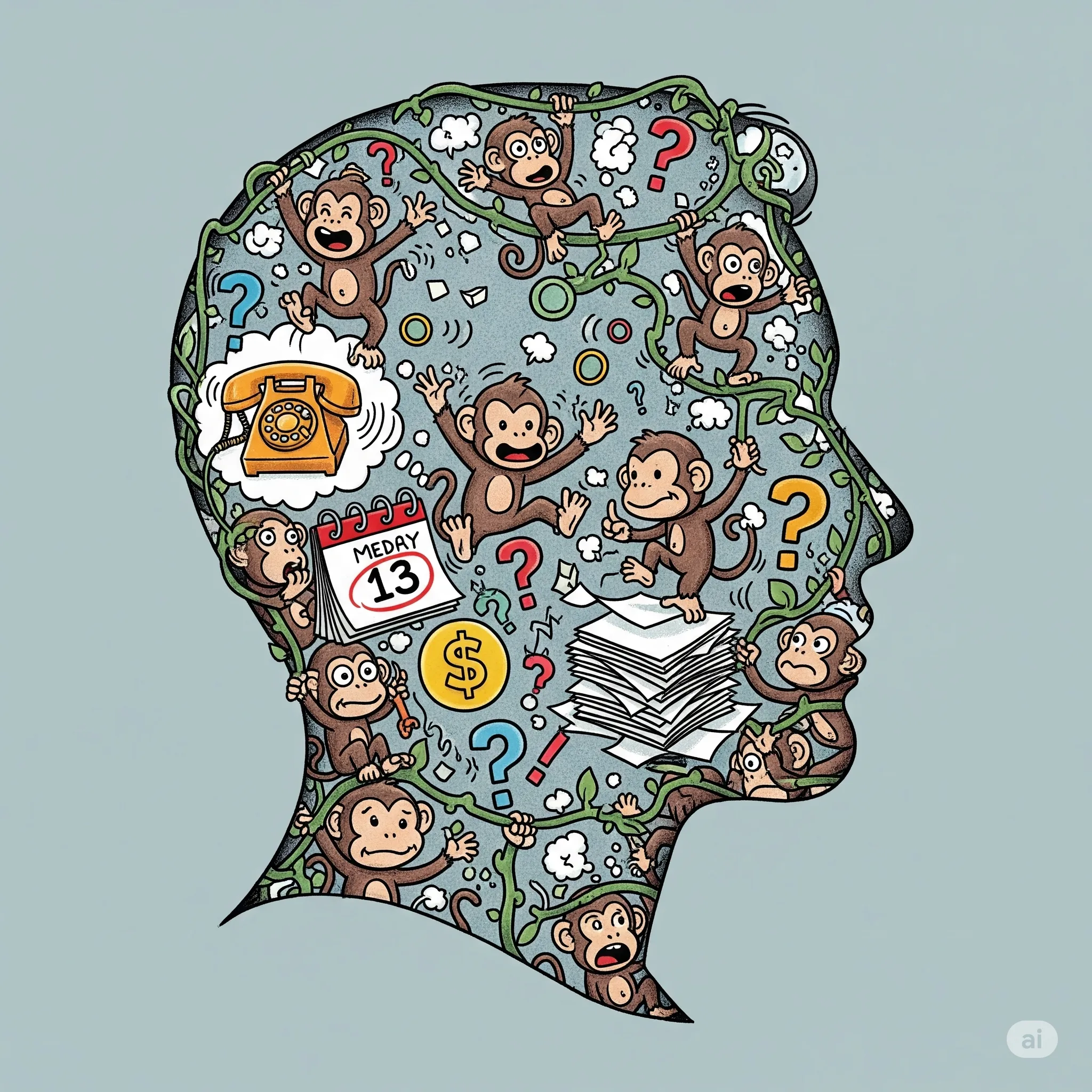
Your "monkey mind"—that Buddhist term for the chattering, jumping-around quality of our thoughts—might actually get more active when you first start paying attention to it. It's similar to when you're trying to fall asleep and suddenly become hyperaware of every sound in your house. The sounds were always there; you're just noticing them now.
When sitting still feels impossible
Traditional seated meditation can be particularly challenging if you're feeling anxious. When your nervous system is activated, sitting still can feel almost impossible. Your body wants to move, to do something, to take action. Fighting against this natural impulse by forcing yourself to sit can actually increase anxiety rather than reduce it.
This is where many people give up on meditation entirely, thinking they're "bad at it" or that meditation "just isn't for them." But what if the problem isn't you—what if it's the approach?
Why tracing meditation might be the answer
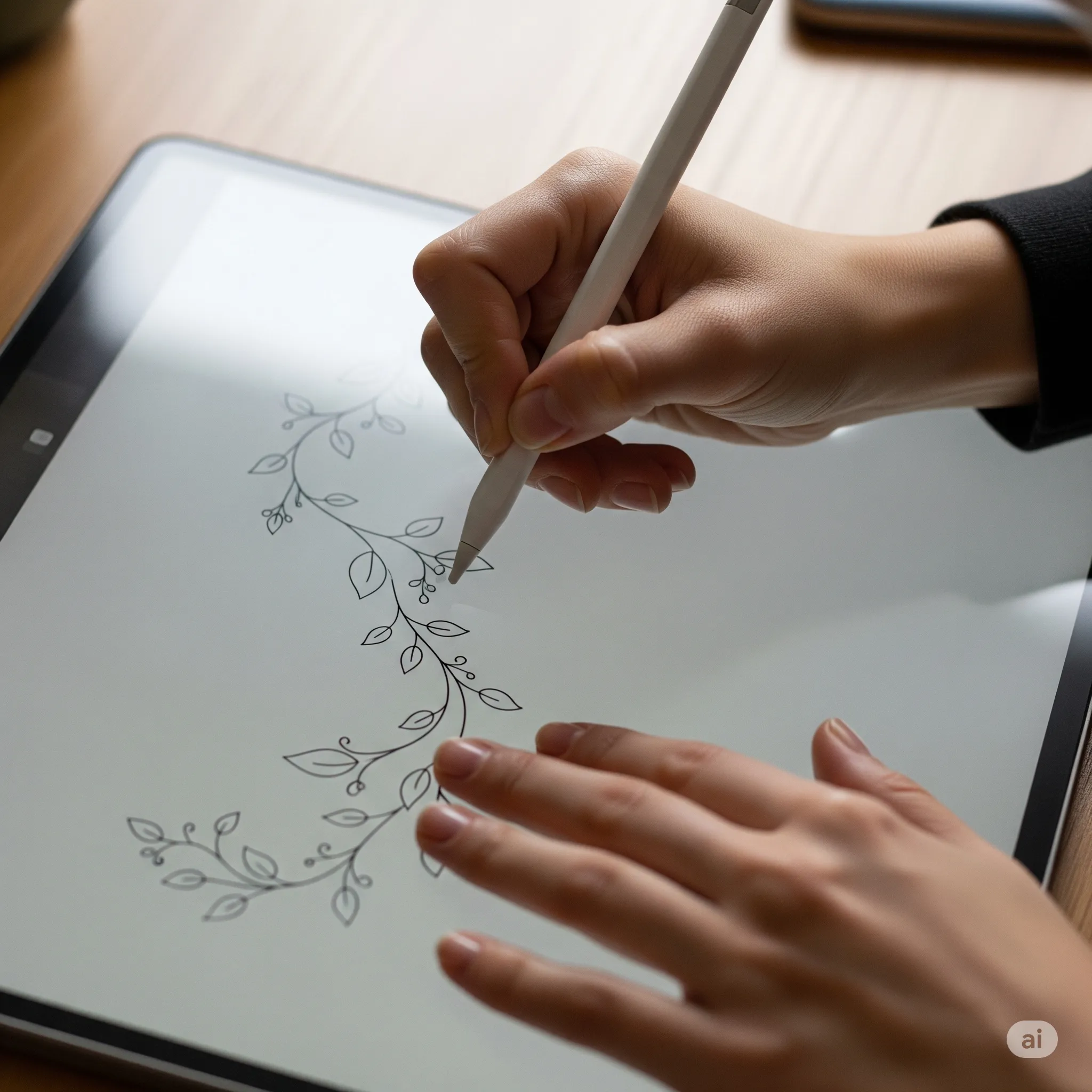
Tracing meditation offers a different path through challenging emotions. Instead of asking you to sit completely still and focus on something as abstract as your breath or the sensation of being grounded, tracing gives your active mind something concrete to focus on: the movement of your hand and the lines you're following.
This active approach to mindfulness acknowledges what your nervous system is asking for—movement and engagement—while still providing all the centering benefits of traditional meditation. When you're tracing, that anxious energy has somewhere to go. Your hand is moving, your mind has a clear focus, and you're still practicing the core skill of meditation: sustained attention to the present moment.
Because you're following a guide rather than creating something from scratch, you don't have to worry about what comes next or whether you're doing it "right." There's no blank canvas to fill, no creative decisions to make—just the simple, repetitive motion of following lines. This can be deeply soothing for an anxious mind that tends to spin out on endless possibilities and what-ifs.
Navigating difficult emotions with tracing
Even with tracing meditation, you might still encounter difficult feelings. The difference is that you have something to anchor your attention when emotions get intense. Here's how to work with challenging feelings during your tracing practice:
Start small. If traditional 10-20 minute meditations feel overwhelming, begin with just two to five minutes of tracing. You can always extend your practice as you become more comfortable with it.
Remember that accuracy isn't the point. If your hand shakes when you're anxious, if your lines wobble, if you trace outside the boundaries—that's all perfectly fine. The goal isn't to create a perfect reproduction; it's to stay present with the process.
Notice without judgment. When you feel anxiety arising, try to observe it with curiosity rather than resistance. "Oh, there's that tight feeling in my chest again," or "I notice my breathing is getting shallow." This isn't about making the feeling go away immediately—it's about learning to be with it without being overwhelmed by it.
Use the motion as medicine. If sitting meditation feels like being trapped with your anxious thoughts, tracing can feel like moving through them. Each line you complete is a small accomplishment, a gentle reminder that you can navigate difficult feelings one moment at a time.
Choose your images mindfully. On particularly anxious days, you might find that nature scenes or simple geometric patterns feel more soothing than complex images. Trust your instincts about what feels supportive.
Building resilience over time
The goal isn't to never feel anxious during meditation—it's to gradually build your capacity to be with difficult emotions without being overwhelmed by them. Research suggests that mindfulness-based practices work by "changing a range of emotional" processes rather than targeting specific symptoms, helping you develop a different relationship with challenging feelings overall.
With regular tracing meditation, many people find that they develop what researchers call "emotional resilience"—the ability to experience difficult feelings without being swept away by them. You might still feel anxious sometimes, but you'll have a toolkit for working with that anxiety rather than being at its mercy.
Your first session: what to expect
If you've been avoiding meditation because you worry it will make you more anxious, tracing meditation might be worth trying. Here's what you can expect:
You might still feel some initial anxiety—and that's okay. The difference is that you'll have the movement of tracing to help you work through it rather than sitting still while your mind races. You might find that your first few lines are shaky or uncertain, but as you settle into the rhythm of tracing, your nervous system often begins to calm naturally.
Some people find that their anxiety actually increases slightly during the first few minutes of any mindfulness practice as they become more aware of their internal state, then gradually decreases as they find their rhythm. Others find that the concrete focus of tracing helps them bypass that initial spike altogether.
Either way is normal, and either way is a successful meditation.
When to seek additional support
While meditation can be a powerful tool for managing anxiety, it's not a replacement for professional mental health care when needed. If you find that your anxiety feels unmanageable, if it's interfering with your daily life, or if meditation consistently makes you feel worse rather than better over several weeks, it's worth speaking with a healthcare provider.
Tracing meditation can be a wonderful complement to therapy, medication, or other treatments, but it works best as part of a comprehensive approach to your wellbeing.
Finding your way forward
Meditation isn't about achieving a state of permanent calm—it's about learning to navigate all of your emotions with greater skill and compassion. Sometimes that navigation includes feeling anxious, and that's not a failure of your practice; it's simply part of being human.
The beauty of tracing meditation is that it meets you where you are. If you're feeling anxious, it gives your anxiety somewhere to move. If you're feeling scattered, it offers a clear point of focus. If you're feeling overwhelmed by the idea of "doing nothing," it provides something gentle and meaningful to do.
Your first tracing meditation might be wobbly, distracted, or anxious—and it will still be valuable. Every line you trace is a moment of mindfulness, every image you complete is practice in staying present with whatever arises. Over time, this simple practice can help you build the emotional resilience to navigate not just your meditation sessions, but all the complexities of daily life with greater ease and self-compassion.