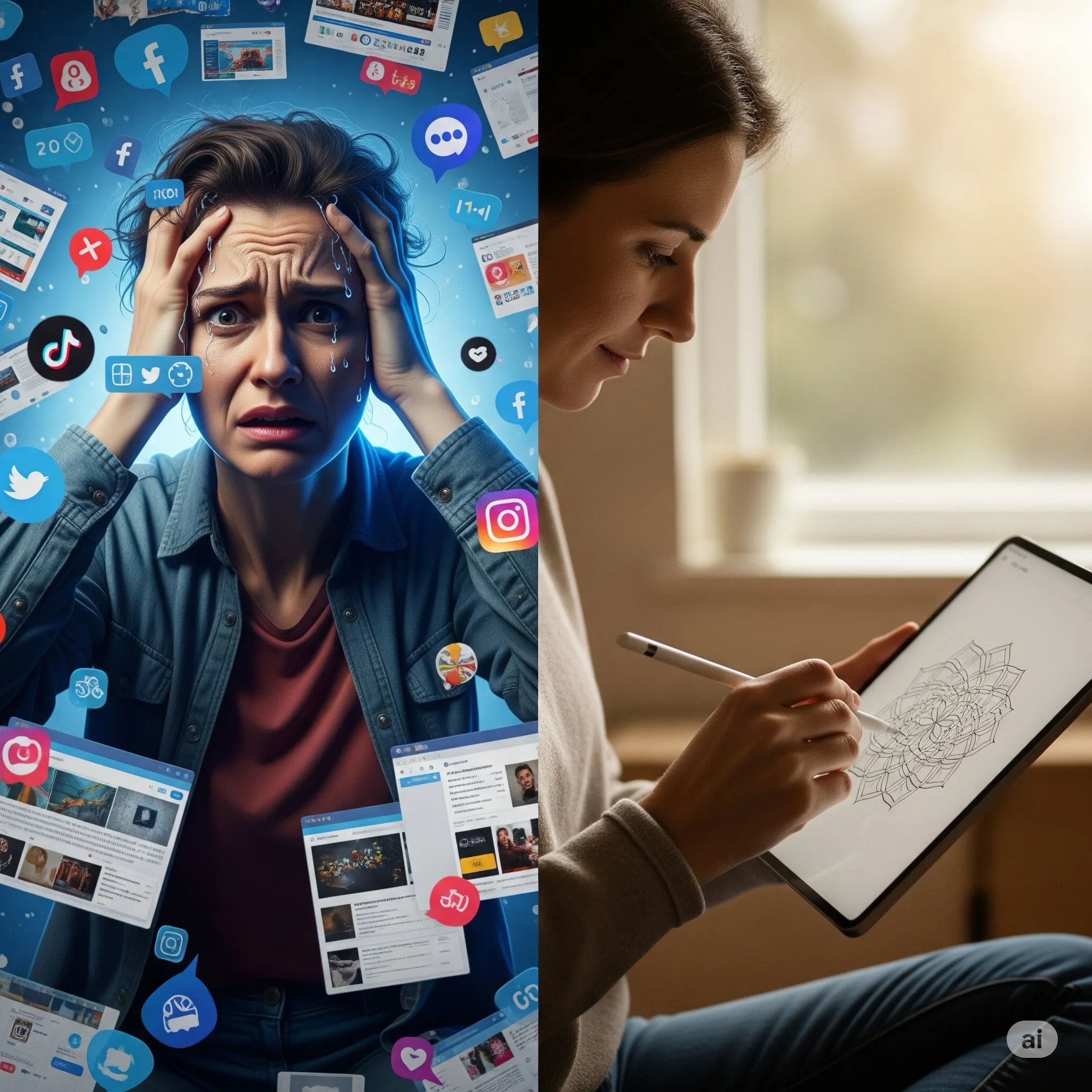
Your phone buzzes. Again. It's the third notification in the last five minutes, and you haven't even finished reading the email that popped up before that. Meanwhile, your smartwatch is reminding you to breathe (the irony is not lost on you), and your laptop screen shows seventeen browser tabs that you "definitely need to keep open." Sound familiar?
You're not alone in feeling overwhelmed by the digital noise that surrounds us. We spend a lot of time staring at screens, with all the fatigue and depression that comes from too many demands on your attention. The solution isn't to abandon technology entirely. That's neither practical nor necessary in our interconnected world. Instead, what if we could transform our devices from sources of distraction into tools for digital wellness? What if the very screen that causes your burnout could become your gateway to mindfulness?
The hidden cost of constant connection
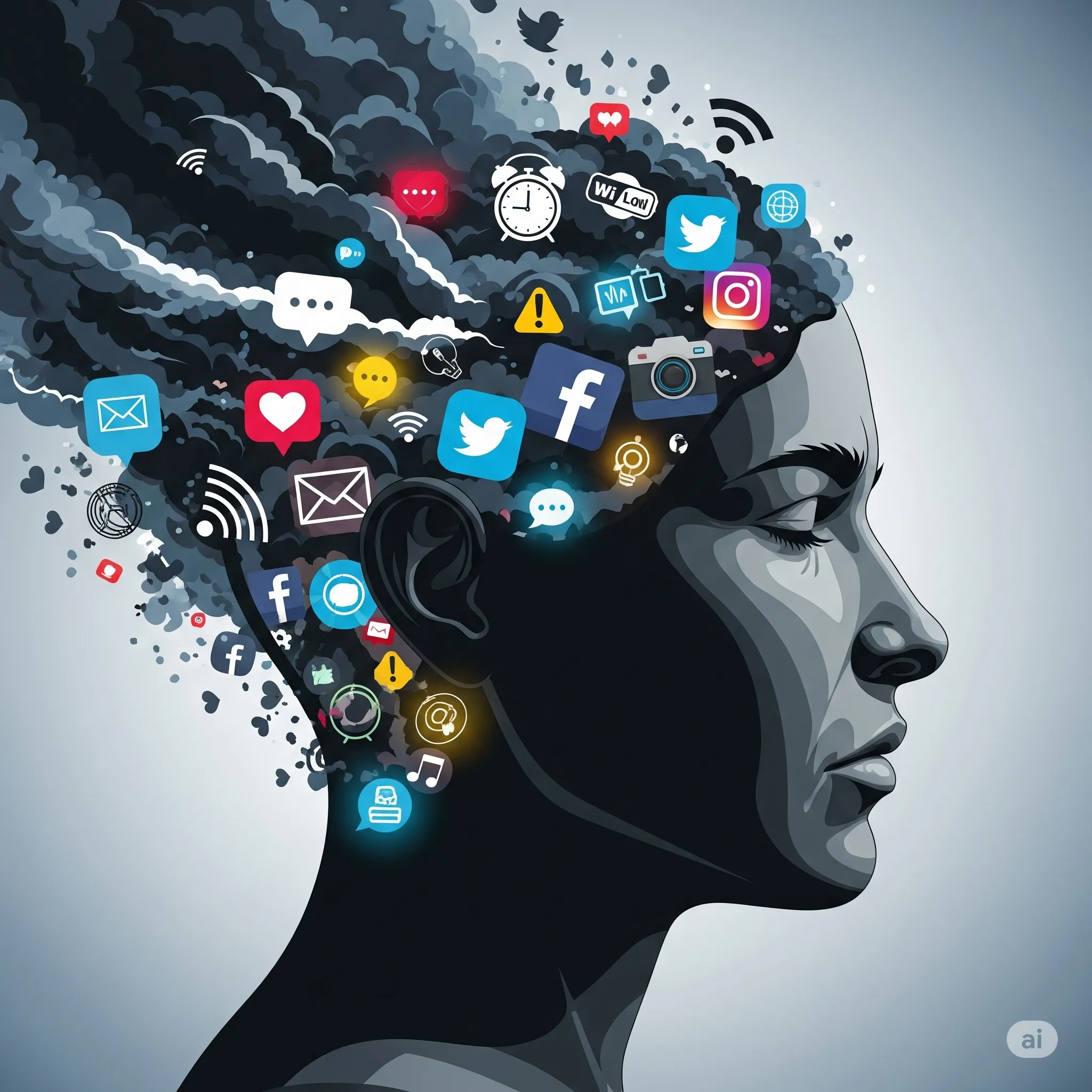
Digital burnout isn't just about tired eyes or a sore neck from looking down at your phone. It's a deeper exhaustion that comes from our attention being constantly fragmented, our minds never fully settling into any single moment. Smartphones now account for over half of all screen exposure, while social media alone claims almost 2.5 hours daily. That's 2.5 hours of your attention being pulled in dozens of different directions, responding to an endless stream of updates, likes, comments, and notifications.
The result? Our brains are stuck in a perpetual state of partial attention, called by many things simultaneously but never fully focused on any one thing. We're multitasking our way through life, and research consistently shows that multitasking doesn't actually make us more productive; it just makes us more scattered and stressed.
Think about the last time you tried to read a book, watch a movie, or have a conversation without checking your phone. If you're like most people, it probably felt uncomfortable, maybe even anxiety-provoking. That restless feeling when we're not constantly stimulated? That's a sign that our attention has been hijacked by digital distractions.
What digital wellness actually means
Digital wellness isn't about perfect balance or finding the "optimal" amount of screen time (though if you're spending more than seven hours a day on screens, you might want to try finding ways to move parts of your routine off-screen!). It involves fostering healthy digital habits, setting boundaries, and leveraging tech-driven tools to support mental, physical, and emotional health.
Fortunately digital wellness doesn't require rejecting technology. It does, though, require us to be intentional about how we use it. Being conscious of how you use the screen can make a big difference, resulting in technology helping you rather than taking over. Instead of mindlessly scrolling through social media during your lunch break, what if you used that same device for five minutes of mindful tracing meditation?
This shift from passive consumption to active engagement is at the heart of digital wellness. Rather than letting technology control your attention, you can learn to use technology to train your attention.
Enter mindful tracing: meditation that makes sense for the digital age
Traditional meditation advice often feels disconnected from our digital reality. "Just sit quietly and focus on your breath" sounds lovely in theory, but when you're surrounded by devices designed to capture your attention, sitting with your eyes closed can feel like trying to meditate in the middle of a bustling marketplace.
This is where tracing meditation offers something different. Instead of fighting against the digital world, tracing meditation works with it. You use your tablet, phone, or other touchscreen device not as a source of distraction, but as a tool for cultivating focused attention.
When you trace an image on your screen—following the gentle curves of a flower, the intricate patterns of a mandala, or the flowing lines of calligraphy—you're giving your monkey mind exactly what it needs: something specific to focus on. The tip of your finger or stylus becomes an anchor for your attention, much more concrete and easier to track than something abstract like your breath.

How tracing meditation transforms your relationship with technology
The beauty of tracing meditation lies in its simplicity and accessibility. You don't need special equipment, a quiet room, or even much time. Got two minutes between video calls? Perfect. Waiting for your coffee to brew? Ideal. That five-minute window while your kids are getting ready for school? Exactly what you need.
Here's what happens during a tracing meditation: You select an image that appeals to you (or let the app choose for you), then slowly trace the lines with your finger or stylus, keeping your attention focused on the point where you're touching the screen. When your mind wanders—and it will—you simply notice where it went and gently return your focus to the tracing.
Unlike scrolling through social media, which fragments your attention across dozens of different pieces of information, tracing meditation unifies your attention. Your eyes, your hand, and your mind are all focused on the same thing: the simple act of following a line. This unified focus is deeply calming for your nervous system and provides a much-needed respite from the constant input of digital life.
The science of screen-based mindfulness
You might be wondering: can staring at a screen really be good for me? The answer depends entirely on what you're doing with that screen. Passive consumption—endlessly scrolling through feeds, clicking from video to video, jumping between apps—keeps your brain in a state of hyperarousal, constantly seeking the next hit of novelty or stimulation.
Active engagement, on the other hand, can be deeply beneficial. Research on digital calligraphy and mindful drawing shows that when we use screens intentionally, focusing on the process rather than consuming content, we can achieve the same benefits as traditional mindfulness practices: reduced stress, improved focus, and better emotional regulation.
The key difference is intentionality. When you open a social media app, you're essentially saying, "Here, internet, take my attention and do whatever you want with it." When you open a tracing meditation app, you're saying, "I'm going to use this device to train my attention and cultivate mindfulness."
Your digital wellness toolkit: beyond just tracing
While tracing meditation can be a powerful tool for digital wellness, it works best as part of a broader approach to mindful technology use. Here are some complementary strategies:
Mindful transitions: Use brief tracing meditations to transition between different activities. After finishing a stressful work call, trace one simple image before moving on to your next task. This creates a mental reset and prevents stress from accumulating throughout your day.
Notification boundaries: Turn off non-essential notifications, especially during designated focus times. When you do check messages, do it intentionally rather than reactively. Consider doing a quick tracing meditation before checking email to approach your inbox with a calmer, more focused mindset.
Screen-free sanctuaries: Designate certain spaces or times as screen-free zones. But when you do use screens, make some of that time mindful. A five-minute tracing meditation before bed can help your mind settle more easily than scrolling through news or social media.
Purposeful pauses: When you catch yourself mindlessly picking up your phone, pause and ask: "What am I actually looking for right now?" Often, we reach for our devices not because we need information, but because we're seeking a moment of mental rest. A brief tracing meditation can provide that rest more effectively than social media.
Making it practical: starting your digital wellness practice
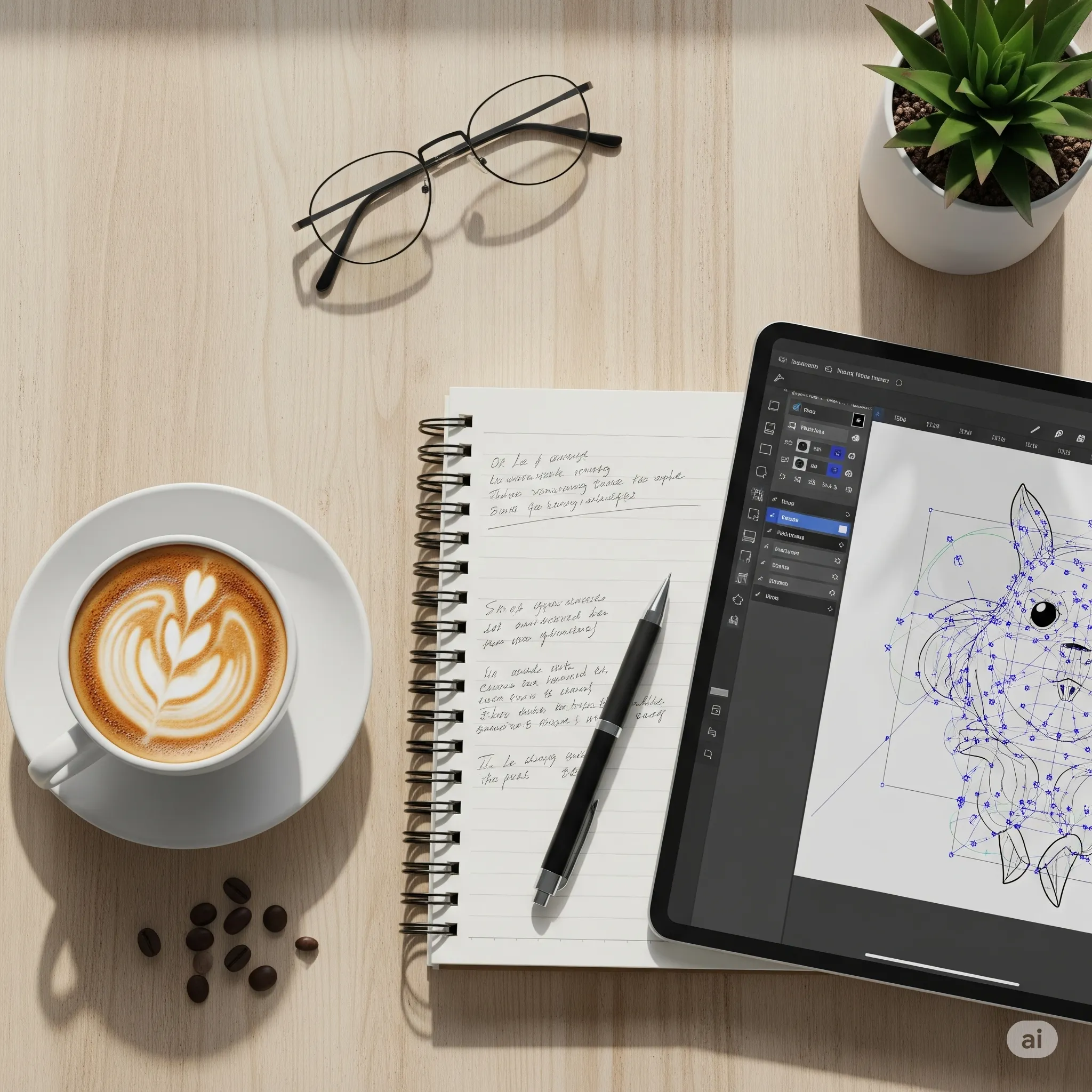
The best mindfulness practice is the one you'll actually do consistently. Start small—even two minutes of tracing meditation can make a difference. You might begin with a simple morning routine: instead of immediately checking your phone when you wake up, spend a few minutes with a tracing meditation to set a focused, intentional tone for your day.
Or try using tracing meditation as a "palate cleanser" between different types of screen work. After a long video call, before diving into email, after finishing a report—these transition moments are perfect opportunities to reset your attention and prevent digital fatigue from building up.
The goal isn't to eliminate all mindless screen use (though you might find yourself naturally doing less of it), but rather to balance passive consumption with active, mindful engagement. When you train your attention through practices like tracing meditation, you become more aware of how different types of screen time affect you. You start to notice the difference between scrolling that leaves you feeling scattered and depleted versus mindful engagement that leaves you feeling centered and refreshed.
Reclaiming agency in the attention economy
We live in what economists call the "attention economy"—a system where your focus is literally the product being sold. Every app, website, and platform is designed to capture and monetize your attention. In this context, learning to direct your own attention intentionally is both a personal wellness practice and a form of quiet resistance.
Tracing meditation offers a way to reclaim agency over your own mind. Instead of being a passive consumer of digital content, you become an active cultivator of your own mental states. Your device transforms from a source of distraction into a tool for developing the very skills you need to thrive in our hyperconnected world: sustained attention, present-moment awareness, and the ability to find calm amidst chaos.
This isn't about achieving perfect digital balance or eliminating all screen time. It's about developing the capacity to use technology consciously rather than compulsively. When you know you have tools for centering your attention—when you can transform any device into a portal for mindfulness—you approach the digital world from a position of strength rather than vulnerability.
Your invitation to digital wellness
Digital burnout is real, but it's not inevitable. The same technology that can fragment our attention can also be used to train it. The same screens that can overwhelm us can also offer us moments of stillness and focus.
If you're feeling overwhelmed by the pace of digital life, consider starting with just five minutes of tracing meditation. Notice how it feels to use your device intentionally rather than compulsively. Pay attention to the quality of your attention—how it feels when it's unified and focused rather than scattered and reactive.
You might discover, as many people do, that the problem isn't technology itself, but how we've learned to relate to it. With practices like tracing meditation, we can begin to transform that relationship, one mindful moment at a time.
In a world that profits from your distraction, choosing to cultivate your attention is both a radical act and a practical necessity. Your future self (the one who is less burnt out!) will thank you for starting today.